Historic Preservation
The Historic Uptown Neighborhood Board is working towards Historic Preservation Designations for neighborhood sections.
Learn more about Historic Preservation Overlay Designations and our preservation efforts for the districts in our neighborhood below.
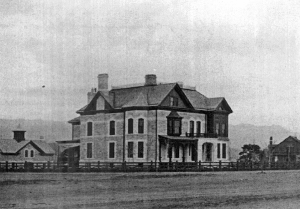
The economic, cultural, and aesthetic standing of Colorado Springs cannot be maintained or enhanced by disregarding the historical and architectural heritage of the City and by ignoring the destruction or defacement of cultural assets. The protection, enhancement, perpetuation, and use of structures and areas of historical or architectural significance located within the City is a public necessity and is required in the interest of the prosperity, civic pride, and general welfare of the people.
CITY OF COLORADO SPRINGS UNIFIED DISTRICT CODE: HISTORIC PRESERVATION OVERLAY PURPOSE & POLICY
Historic Preservation Designations
One method of Historic Preservation is to obtain a formal designation. There are three types of formal designations:
- The National Register of Historic Places is the official list of the Nation’s historic places worthy of preservation; administration is handled by states. Listing in the National Register is largely honorary, and the only limitations involve the use of federal funds.
- The Colorado State Register of Historic Properties is the list of the state’s significant cultural resources worthy of preservation for the future education and enjoyment of Colorado’s residents and visitors.
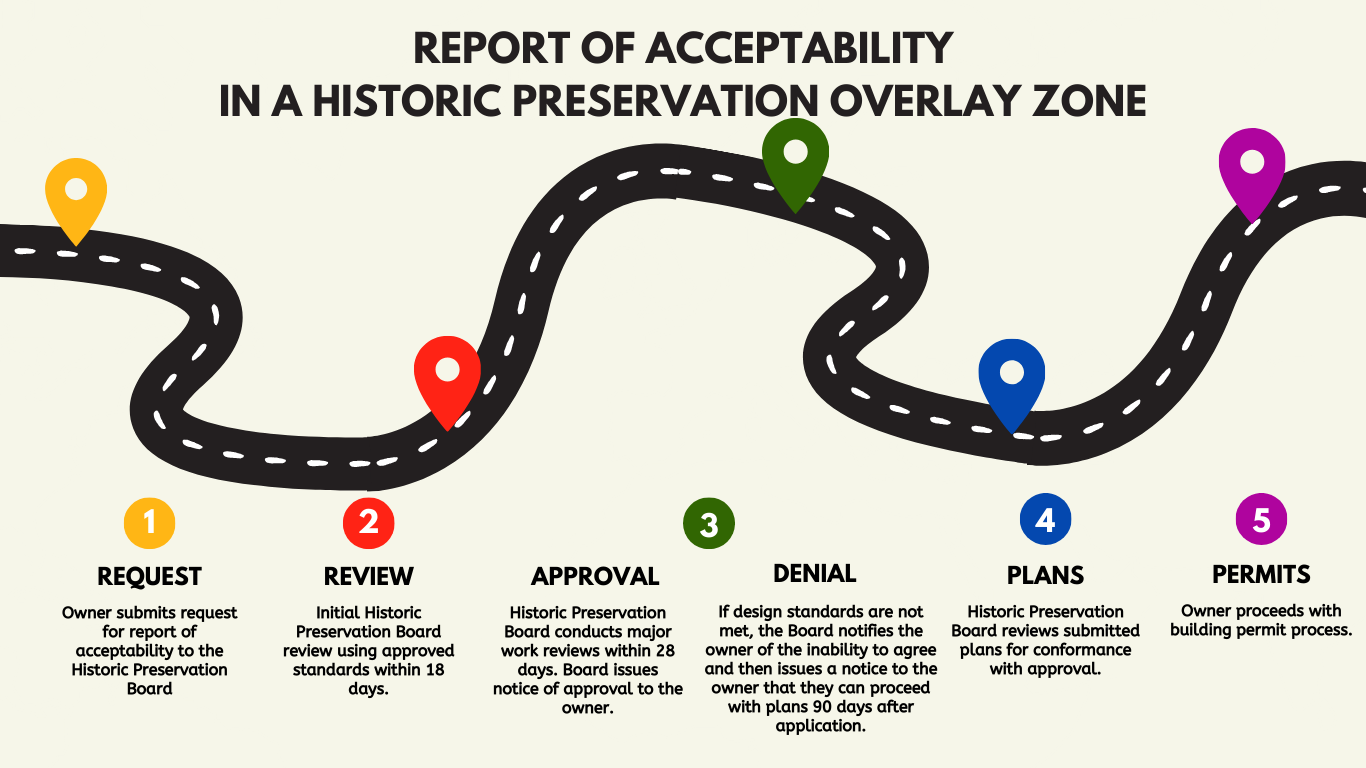
- Local Historic Preservation Overlay Zone (HP-O) is a change of zoning classification. For properties in a Historic Preservation Overlay Zone, the Historic Preservation Board which consists of 7 citizens appointed by the City Council, will review building (and other) permits for conformance to adopted Design Standards for the area. The roadmap below explains this process in more detail.
Historic Designation Standards
- Historical Importance – The structure or area:
- Has significant character, interest, or value, as part of the development, heritage, or cultural characteristics of the city, state, or nation.
- Is the site of a historic event with a significant effect on society;
- Is identified with a person or group of persons who had a significant influence on society; or
- Exemplifies the cultural, political, economic, social, or historic heritage of the community.
- Architectural Importance – The structure or area:
- Portrays the environment of a group of people in an era of history characterized by a historically important and distinctive architectural style;
- Embodies architecturally distinguishing characteristics;
- Is the work of an architect or builder whose individual work has influenced the development of the City;
- Contains elements of architectural design, detail, materials, or craftsmanship that represent a significant innovation; or
- Contains buildings that, although individually lacking distinction, collectively display distinguishing characteristics.
Benefits of Historic Designation
| Designation | Historical Marker | Rehabilitation Tax Credits | Historic Preservation Protection | Building Permit Restrictions | Major City Changes Protection | Transit Oriented Development Protection |
|---|---|---|---|---|---|---|
| National Registration Only | ✔ | ✔ | ✖ | ✖ | ✖ | ✔ |
| State Registration Only | ✔ | ✔ | ✖ | ✖ | ✖ | ✖ |
| Historic Preservation Overlay Only | ✔ | ✔ | Minimal | ✖ | ✖ | ✔ |
| Historic Preservation Overlay & State Registration | ✔ | ✔ | Minimal | ✖ | ✖ | ✔ |
| Historic Preservation Overly & National Registration | ✔ | ✔ | ✔ | ✔ | ✖ | ✔ |
Effort Required for Historic Designation
| Designation | Estimated Cost | Applicant Knowledge Level | City Planning Approval | Historic Preservation Board Approval | Form-Based Zone Approval | Owner Approval | Required Documentation |
|---|---|---|---|---|---|---|---|
| National Registration | $3,000+ | Professional | ✖ | ✖ | ✖ | Landmarks: ✔ Districts: ✖ | Property identification, maps, photographs, architectural descriptions, historic significance, application form |
| State Registration | $3,000+ | Professional | ✖ | ✖ | ✖ | ✔ | Property identification, maps, photographs, architectural descriptions, historic significance, application form |
| Historic Preservation Overlay | $500 rezone fee if not initiated by the Historic Preservation Board | Novice | ✔ | ✔ | ✔ | Preferable | Property identification, biography identifying the importance of the developer, photographs, architectural description, historic significance, application form |
Preservation Insights
Parkside Historic District Preservation
Parkside District Preservation: The board is working towards obtaining a historic designation, with several properties already listed in state or…
Keep reading
Resources for Property Owners
Resources for Property Owners: The benefits of researching the history of a property for owners, including insight for rehabilitation, potential…
Keep reading
Colorado Springs Historic Preservation Overlay Code
Colorado Springs Historic Preservation Overlay: The Colorado Springs 7.2.608 HP-O: Historic Preservation Overlay code establishes a Historic Preservation Overlay (HP-O)…
Keep reading
Tax Credits
Tax credits are available for historic rehabilitation to promote the renovation and re-use of old buildings. Visit History Colorado and…
Keep readingApply for A Historic Preservation Overlay Zone
This Historic Uptown Neighborhood Association will apply for a Historic Preservation Overlay Zone for undesignated districts in our neighborhood. Here is the process we will follow.
Before applying for Historic Preservation Overlay designation, make sure you have read the designation standards that must be met to qualify for designation. The steps below are required for a Zoning Map Amendment (Rezone).
Step 1: Pre-Application Meeting with Planning and the Historic Preservation Board
Schedule a pre-application meeting with the Planning staff and the Historic Preservation Board. They can help:
Assess whether property or properties have the potential for Historic Preservation Overlay historic designation.
Advise which application and fees apply.
Advise what additional research is needed to complete the application form.
Provide information about the designation process.
Provide guidance to improve and strengthen your application.Step 2: Application Submittal
Complete the appropriate Zoning Map Amendment application and review fee schedules and payment options.
Step 3: Planning Commission/Historic Preservation Board Review
Once an application is complete and the Historic Preservation Overlay designation standards are met, a public hearing is scheduled before the Planning Commission and the Historic Preservation Board. If the property is located in a Form-Based Zone (FBZ), then a Form-Based Zone Board Review will also be required.
The owner is notified and a sign is posted on the property announcing the pending designation and public hearing.
The Planning Commission, the Historic Preservation Board, and optionally the Form-Based Zone Board will separately hear public testimony and determine if the properties meet Historic Preservation Overlay designation standards.
The application is forwarded to the City Council if the Planning Commission, the Historic Preservation Board, and optionally the Form-Base Zone Board determine that a property meets Historic Preservation Overlay designation standards.Step 4: City Council Decision (Public Hearing)
If the Planning Commission, the Historic Preservation Board, and optionally the Form-Based Zone Board determine the property meets Historic Preservation Overlay designation standards, the City Council will hear public testimony at the hearing and make a final determination on the designation.
Step 5: Appeal to City Council (Public Hearing)
If the Planning Commission and/or the Historic Preservation Board and/or optionally the Form-Based Zone Board denies the application, the applicant can appeal to the City Council.
Additional Resources
- History Colorado Types of Historic Designations
- Read more about other historic districts in our neighborhood:
- Historic Uptown Neighborhood History and Architecture Book: Read more about 57 historical properties in the Historic Uptown Neighborhood.
- Lost & Preserved in Colorado Springs: This Rocky Mountain PBS video explores historic preservation in COS for the city’s 150th anniversary. It asks “How can we create the future and honor the past?”
- El Paso County National Register of Historic Places listings: A list of the National Register of Historic Places listings in El Paso County, Colorado.
- Google Drive Folders: This includes all of the Historic Uptown Neighborhood’s historic preservation documents.
- SpringsView: An interactive map of Colorado Springs useful for research.
