Speak Up on the City’s Parking & Curb Management Plan
The City of Colorado Springs has unveiled its Draft Parking and Curb Management Plan, which significantly impacts Historic Uptown. While proposing increased paid parking and improved micromobility, it neglects residents’ demand for more free parking and fails to include Historic Uptown in community outreach, prompting concerns regarding accessibility and local representation.
Table of Contents
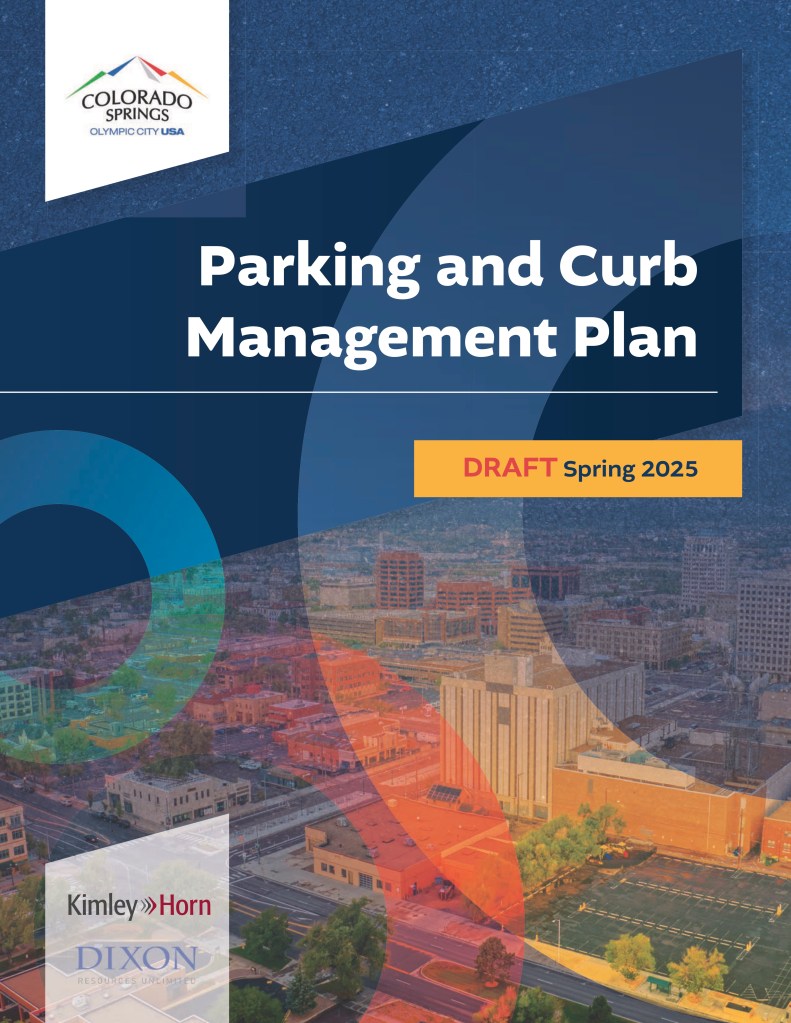
Plan Draft Released
The City of Colorado Springs has released its Draft Parking and Curb Management Plan—and the residents of Historic Uptown have reason to pay close attention. While the plan aims to shape the future of parking and curbside access in downtown and surrounding neighborhoods, it overlooks a number of key concerns raised by residents, ours included.
What’s in the Plan?
The draft plan proposes several changes, including:
- Increased paid parking rates based on demand.
- Prioritization of short-term loading zones and micromobility (scooters, bikes).
- Expansion of digital tools and automated enforcement.
- Changes to curbside use on streets like East Bijou (which borders Historic Uptown).
While some of these efforts—such as improving walkability and bike access—are welcome additions, the plan fails to consider the most common piece of public feedback: the need for more free parking.
Why is Historic Uptown a Stakeholder?
Though we’re just blocks from the downtown core, Historic Uptown is not explicitly addressed in the plan. However, our neighborhood stands to be directly impacted in several ways:
- Increased competition for street parking, especially along East Bijou, which will face changing curb uses and possible time restrictions.
- Spillover from nearby high-demand areas, driving up the number of cars parking in our neighborhood.
- No inclusion in the pilot Neighborhood Permit Parking (NPP) program, despite being likely to experience the very challenges the NPP is meant to address.
Even more concerning, Historic Uptown was not included in the City’s outreach and stakeholder meetings. While community surveys were conducted, many residents—including those of us in directly impacted areas—were unaware and uninvited. This lack of inclusion undermines the very foundation of community-informed planning.
Our Neighborhood’s Concerns
- Free parking was the most requested item by the public—and it’s being ignored.
- Businesses are leaving downtown due to a lack of accessible, affordable parking.
- If vehicle access is being reduced, public transportation must become safer, more reliable, and better funded.
- Historic Uptown deserves representation in conversations that affect us.
How Can You Get Involved?
We’re encouraging residents to make their voices heard before the plan moves forward. Here’s what you can do:
Email your feedback to:
Parking.Office@coloradosprings.gov by Wednesday, April 30
If the email bounces, please send the feedback to this list: Parking.Office@coloradosprings.gov, joel.small@coloradosprings.gov, garry.jamerson@coloradosprings.gov, max.donofrio@coloradosprings.gov, gayle.sturdivant@coloradosprings.gov
- More free and short-term parking options
- Inclusion of Historic Uptown in permit parking protections
- Increased community engagement, transparency, and accountability
- Transit improvements that match any reduction in car access
Let’s ensure the City hears from the people who live, work, and invest in this community every day. Together, we can push for a plan that enhances access without sacrificing equity or economic vitality.
Historic Uptown’s Response
Historic Uptown Board emailed the parking office our feedback on April 14, 2025. The email is below. We are waiting on the Parking Office’s response and will keep this page updated.
Dear Parking Office,
Thank you for the opportunity to review the draft Parking and Curb Management Plan. As the Historic Uptown Neighborhood Board, we are submitting our consolidated feedback with a focus on the areas that directly impact our neighborhood and reflect concerns raised by our residents.
1. Lack of Resident Inclusion in the Planning Process
Despite the plan’s references to community engagement, no one from our neighborhood recalls being invited to participate in surveys or stakeholder meetings.
We ask:
- Why were Historic Uptown, Old North End (ONEN), and other neighborhoods near downtown not included as stakeholders?
- Who was invited to provide feedback?
- How will community input be gathered more equitably going forward?
We respectfully request a listening session between Parking Enterprise staff, Traffic Engineering, and Historic Uptown residents to better understand our neighborhood’s unique concerns and how they can be represented in future planning.
2. Concerns About Bus Rapid Transit (BRT) Implementation
The draft references BRT plans that are either outdated or misaligned with prior commitments made in ConnectCOS. Specifically, the idea of routing BRT through residential corridors like Weber or Nevada directly contradicts assurances previously given to our neighborhood.
We urge the City to:
- Honor the commitments made in ConnectCOS, which included evaluating parallel routes and completing additional safety, environmental, and traffic analyses before determining a route.
- Avoid routing high-volume transit through historic residential neighborhoods.
- Provide clarity about the current status and future scope of the BRT route and related infrastructure.
3. Neighborhood Parking Permits and Enterprise Control
The current plan references a Neighborhood Permit Parking (NPP) program, but only mentions Cragmoor. Historic Uptown, ONEN, and CC neighborhoods also operate under residential permit programs, including one established as part of a mitigation agreement during the Robson Arena approval process.
We ask:
- Will Historic Uptown, ONEN, and CC permits be transitioned to Parking Enterprise control?
- Historic Uptown requests that our permits remain managed by the City rather than the Parking Enterprise. These permits were issued permanently as part of a negotiated neighborhood agreement and are not subject to annual renewal.
- Shifting management to the Enterprise may introduce cost, complexity, and confusion—while creating incentives that prioritize revenue over resident needs.
We request an exploratory meeting with Traffic Engineering and the Parking Enterprise to discuss:
- Current enforcement gaps (residents must currently self-enforce)
- The City’s role in managing versus enforcing permits
- How permit designations will be protected from being absorbed into broader downtown strategies
4. Transparency About Future Parking Infrastructure
The plan proposes increases in parking fees but does not make clear how that revenue will be reinvested. Since the Parking Enterprise is self-sustaining and funded through user fees, we ask for:
- A breakdown of how revenue is currently allocated
- Whether new parking structures are being planned or budgeted for downtown
- If so, where those structures will be located
- Whether outside funding (e.g., state grants, economic development funds, private donors) will be pursued to supplement Enterprise revenue
5. Free and Timed Parking: Clarifying Our Position
While we support downtown businesses having access to free or timed parking, we want to clarify that this is not a request to designate residential streets in Historic Uptown as downtown business parking.
Instead, we recommend the following:
- Pilot free 15–30 minute short-term parking, modeled after Manitou Springs
- Explore partnerships with neighborhood-serving businesses that have unused lots during off-hours to accommodate overflow parking
- Encourage new downtown development to incorporate underground or upper-floor parking for both residential and public use, avoiding the need for large centralized surface lots
- Maintain residential streets as residential—not as overflow or designated business parking zones
Thank you again for the opportunity to share feedback. We look forward to your response and to a meaningful conversation about how these policies can better reflect the needs of adjacent neighborhoods like ours.
Sincerely,
The Historic Uptown Neighborhood Board

Leave a comment