First United Methodist Church
420 North Nevada Avenue
Built 1901
Architect Tom P. Barber
Do you have stories, documents, or pictures of the First United Methodist Church?
About
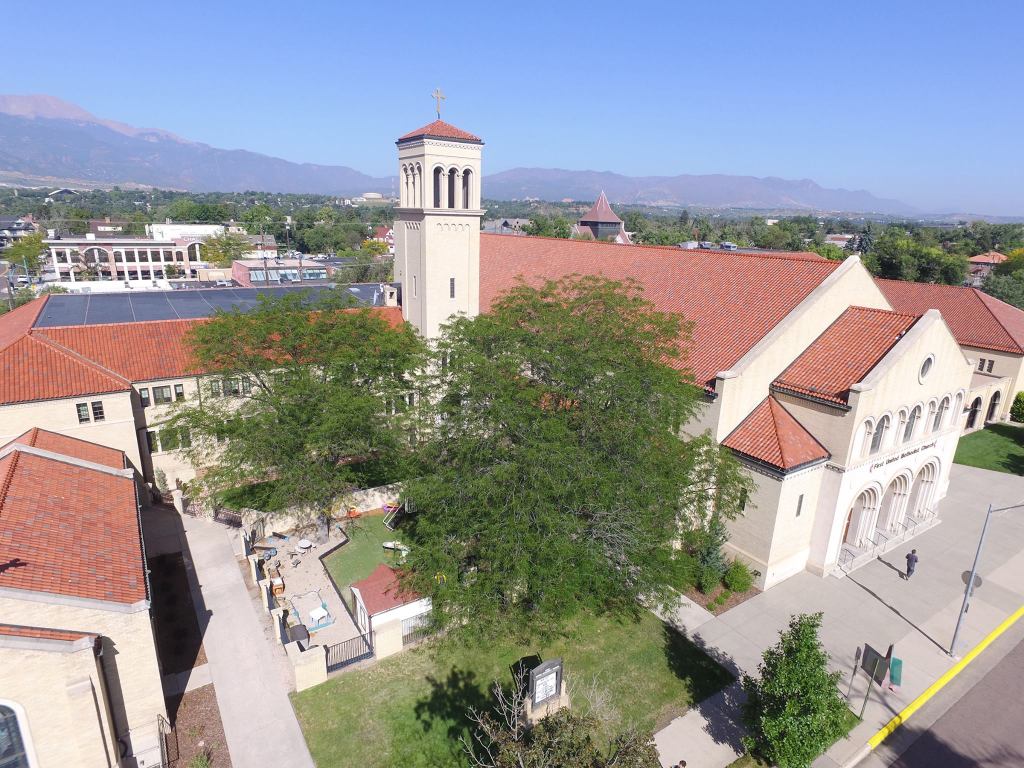
The First United Methodist Church at 420 North Nevada Avenue stands as a testament to the growth and resilience of Colorado Springs. Built in 1901 and designed by architect T.P. Barber in the Romanesque style, the church’s towering stone structure reflects its congregation’s enduring dedication to faith and community. Known for its grand arched windows, intricate details, and a sense of solemnity within its sanctuary, the building encapsulates the vision of a growing city seeking permanence and purpose.
The church’s history is deeply tied to the city’s development. Its congregation, which began as a small group meeting in 1871, grew alongside Colorado Springs, constructing three previous buildings before settling at its current location. Notable features of the church include its stained glass windows, including a Tiffany masterpiece commissioned in 1939, and a pipe organ with over 5,000 pipes.
Today, the First United Methodist Church continues to serve as a place of worship and community gathering, standing smaller in the city’s modern skyline but no less significant in its impact.
Timeline
1901
The congregation moved to its current location on Boulder and Nevada. Designed by T.P. Barber, this Romanesque-style building featured grand arches, stained glass, and a pipe organ donated by member William Lennox.
The congregation numbered over seven hundred when, in 1901, Dr. Charles B. Wilcox appointed a committee headed by William Lennox to search again for a site to build a new church. They secured a lot on the corner of Boulder Street and Nevada Avenue. The Colorado Telegraph ran a report of the cornerstone laying service on June 27, 1901, which said in part that Bishop Warren gave the keynote speech and “he impressed his hearers with the seriousness of the occasion, laying especial emphasis upon the noble work that was to be carried on in the new edifice … The church will be one of the handsomest in the state and will provide the largest church auditorium in Colorado Springs.”1
Handsome was an understatement. T.P. Barber, a local architect and member of the church, chose elements of what is considered by many scholars as the only “truly American” architectural style: the Richardsonian-Romanesque of H.H.Richardson. Richardson’s Trinity Church on Copley Square in Boston was the model for literally thousands of churches in America. Barber adopted several of Richardson’s exterior themes such as monumental stone masonry, arcuated (arched) entries with massive carved doors, a large bell tower, decorative cast iron ornament, colonettes, and spectacular art glass windows. He then devised a unique combination of rotunda (round) central core, gabled extensions on three sides, and broken returns on decorative gables for the corner towers.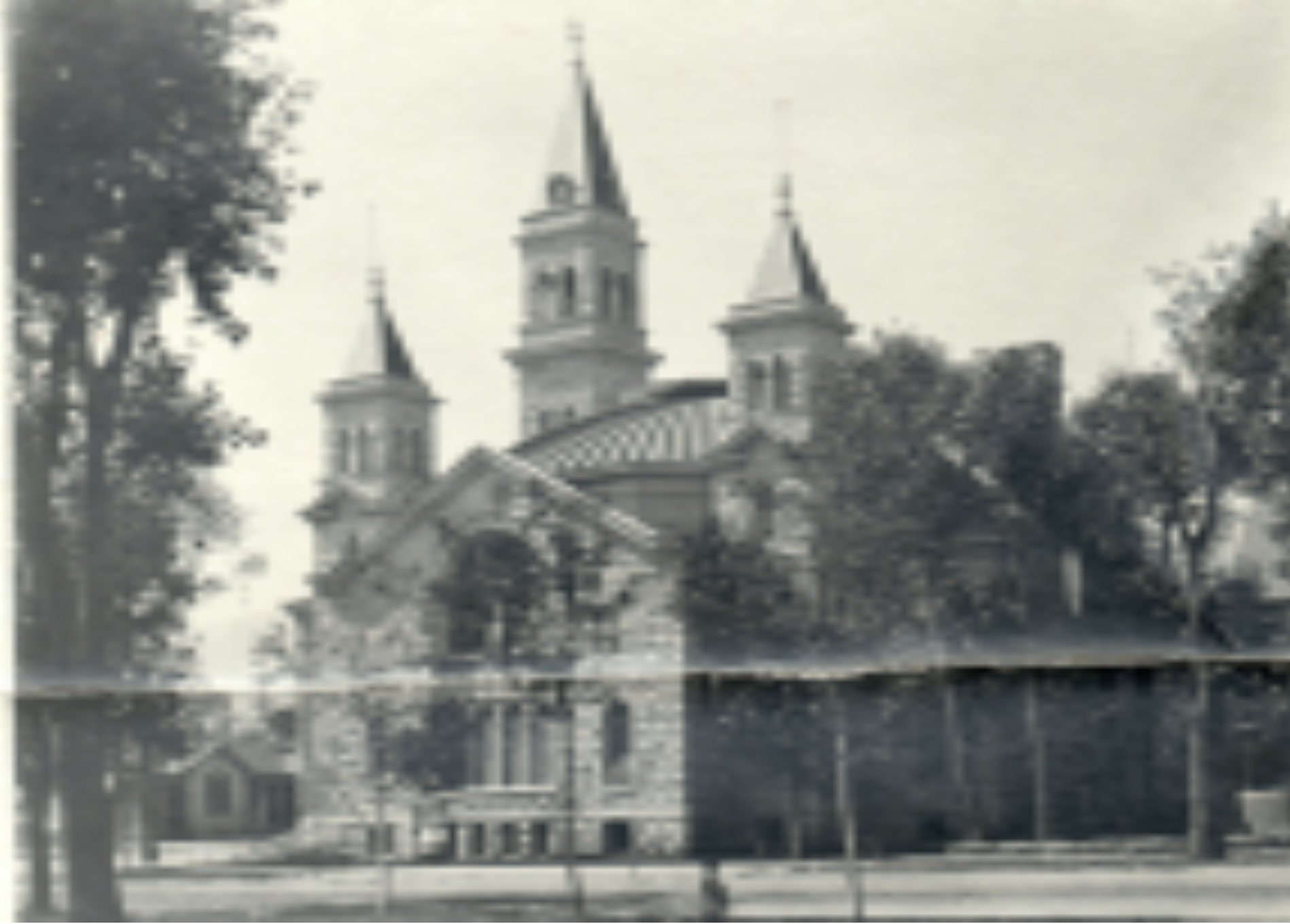
First Methodist Episcopal Church 1901-1939, Photographer E.B. Simmons 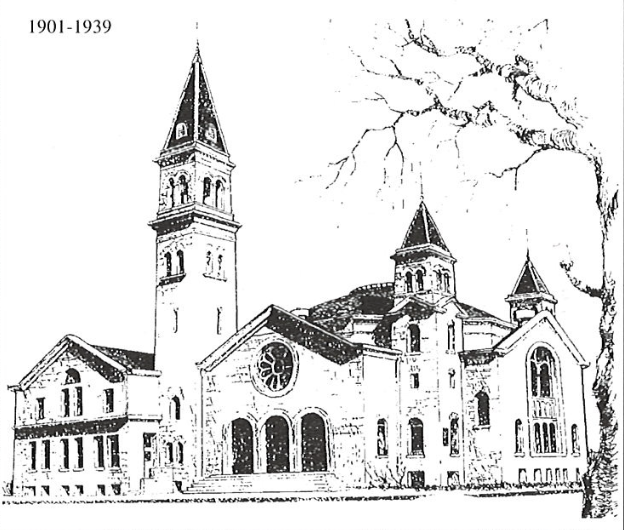
First United Methodist Church 1901-1939 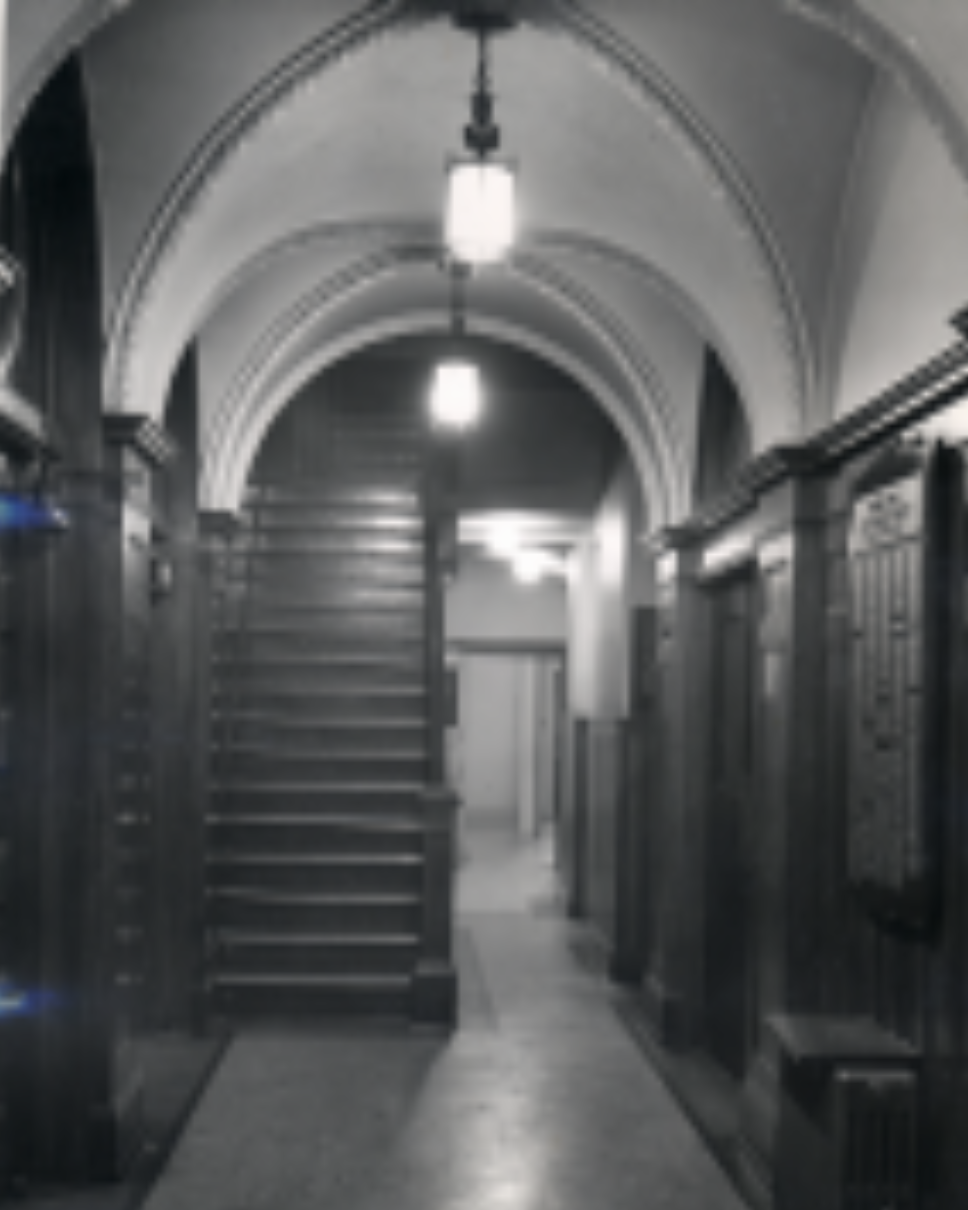
Behind three arched entry doors, a foyer ran the length of the building facing Boulder Street. The sanctuary could be reached through doors across the foyer from the entry or up a carved wooden staircase which led to the balcony 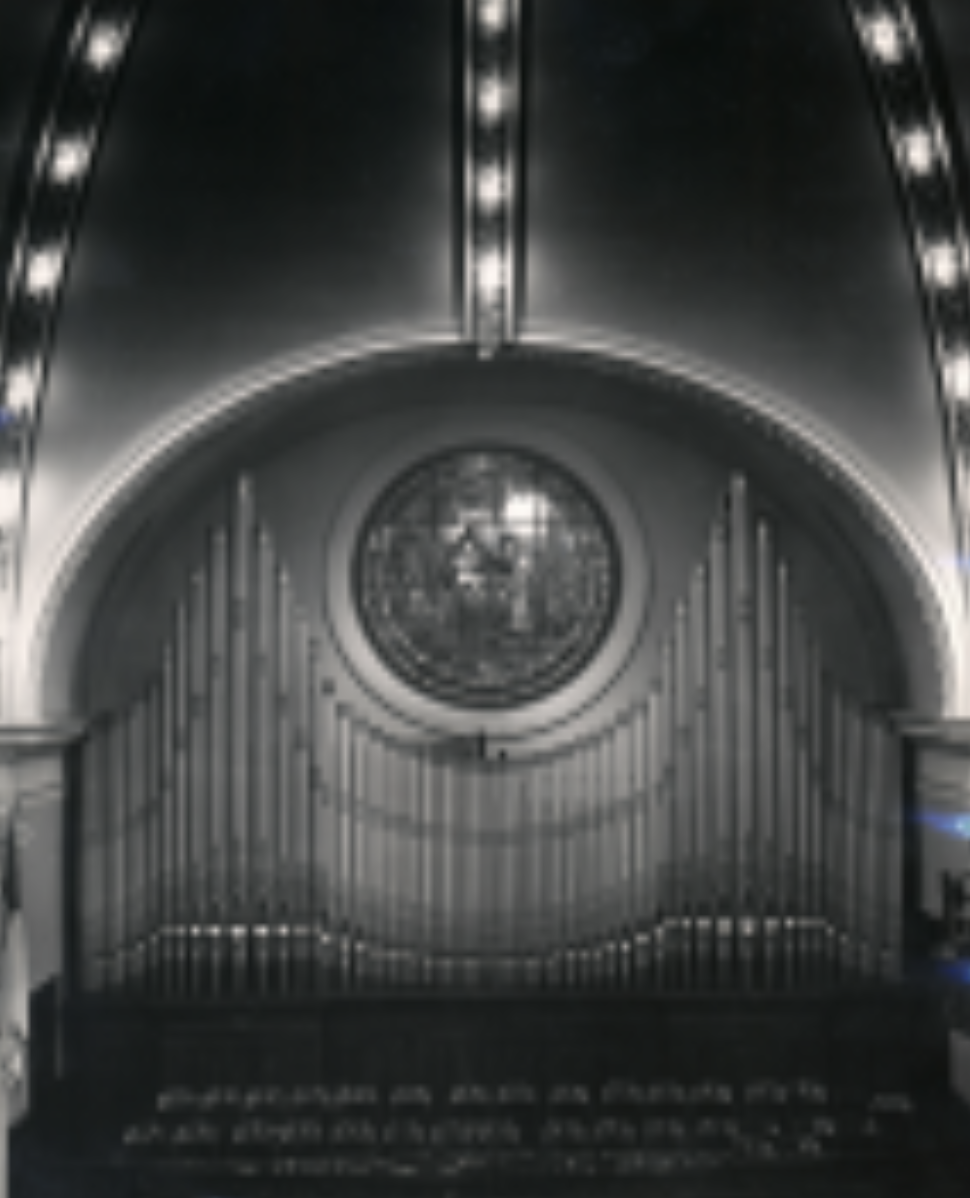
In the grand space of the sanctuary, the congregation was greeted with decoratively painted organ pipes framing a magnificent Tiffany Window of “Christ Blessing Little Children” over an arched, recessed choir loft. 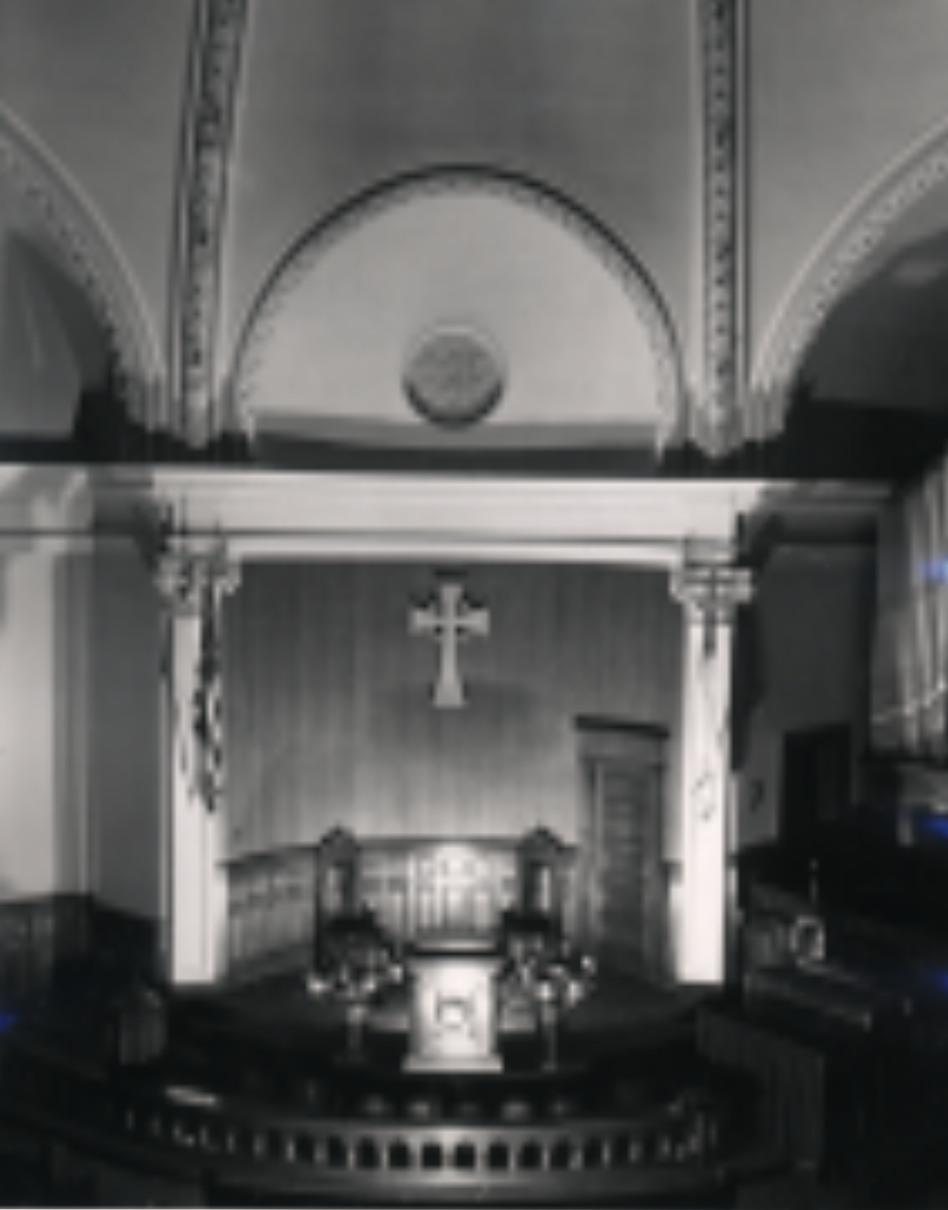
The pulpit area was located to the immediate left of the choir loft and a balcony with decorative wrought iron railings was situated around the east, south, and west of this circular plan. 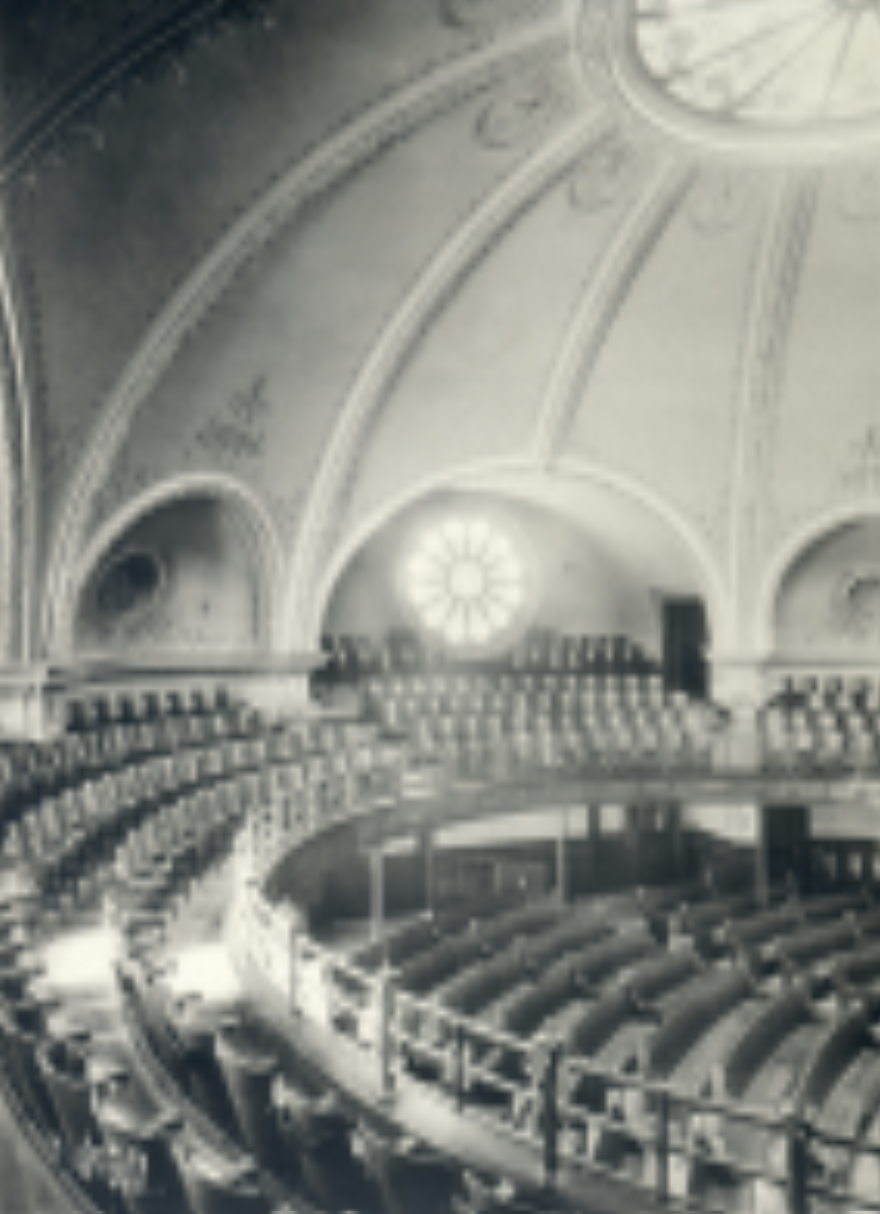
Corinthian pilasters (partial columns, attached to the walls) topped by a wide Corinthian cornice seemed to support a vaulted ceiling which rose with intricately molded plaster ribs to a circular blue and green art glass window in the dome.
1902
Bishop Henry W. Warren dedicated the new church on July 6. The Bishop preached the morning sermon while Chancellor H.A. Buchtel, of Denver University, preached at the evening service.
1908
On Friday morning, September 11, at about 5:00 a.m., the church Sunday school was badly damaged by fire. In the succeeding months the architect, T.P. Barber, and the other members of the Building Committee arranged to have the Sunday school rooms restored and to have the second story extended in order to provide additional class-rooms. The insurance claim was settled on September 23, for $13,365.22. It paid for most of the restoration and expansion of the facilities.
1920
In April of this year the balance of the half block on Boulder Street was purchased. This was the first step toward realizing the dream of a new Parish House (Sunday School). The leader in this movement was C.A. Hibbard. His interest led him to enlist others in both the planning and giving of time and resources until the dream was fulfilled twenty years later.
1939
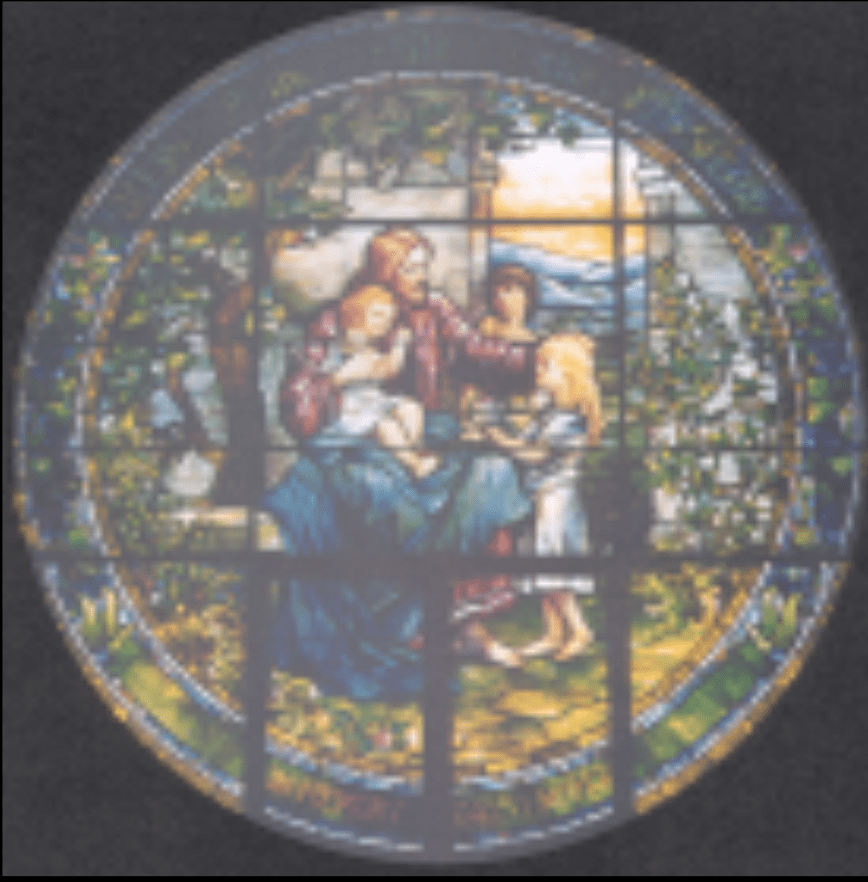
The Daisy Scott Memorial Window, created by the L.C. Tiffany Company, was installed, further enhancing the church’s artistic and historical significance.
Daisy Scott Memorial Window
Louis Comfort TiffanyWhereas Senator N. B. Scott of West Virginia has placed in our new church a beautiful Tiffany window representing “Christ Blessing Little Children” in memory of his beloved daughter, Daisy, therefore be it resolved that the members of the Official Board hereby express their gratitude to Mr. and Mrs. Scott and their high appreciation of this beautiful gift. It is regarded as a gem by the entire church and wins the enthusiastic admiration of every beholder. We assure the givers that they will be held in grateful remembrance.
On behalf of the Official Board, by the committee. C. B. Wilcox, Pastor E.B. Simmons, Secretary of Board July 15, 1902
“…About the Rose window that was given by Senator and Mrs. Nathan B. Scott at the time the present structure was built: Senator Scott was my uncle, the husband of my mother’s oldest sister. Mr. Scott was from West Virginia; he was wounded in the Civil War and spent some time in the Libby prison. Before that, he had come west and was in Denver at the time of the Gold Rush of 1849. He must, then, have been only a boy. In the ‘90s he had a glass factory in West Virginia. Under President McKinley he was Commissioner of Internal Revenue. He and his wife spent several summers with us at 426 East Pike’s Peak Avenue near the Santa Fe station. Their first child, named Daisy, died when about eight years of age. This was a severe blow to them, and the Rose Window was given to the church in her memory. At the same time, father and mother [Mr. and Mrs. William G. Lennox] gave the pipe organ, [Plate] and a little later mother gave the property at 501 North Nevada as a parsonage.” -Dr. William G. Lennox
This Memorial Window, a priceless art treasure, originally hung in the 1902 church and was moved to the new sanctuary in 1955. Mae Bel Thompson recorded in a typewritten note attached to the above letter [that] “Mr. Tiffany wanted to display the window in his New York studio, considering it the most beautiful window of different colors. Double layers are used on the outer rim and in portions of the center which gives subtle depth and beauty to the composition.” The young girl offering flowers to Jesus is Daisy, and the child in the background her sister Agnes. The baby is thought to be symbolic.
1959
The church expanded its facilities, reflecting its continued growth and influence in the community.
1964
The church embraced modern technology with the launch of a television ministry, which later transitioned into an online presence, connecting the congregation to a global audience.
Church Members
Members of the church who resided in Historic Uptown.
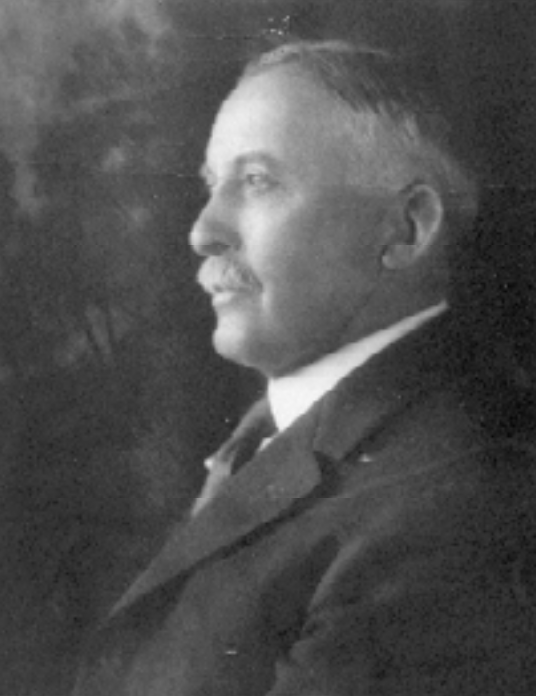
William Lennox, 1850-1936
Member, First Methodist Episcopal Church, 1879-1936
Mr. Lennox was one of the staunch members of the church. He served on the Board of Trustees from 1879 to 1936. He was Chairman of the Board from 1893 until his death in 1936. He gave generously of his resources; the two most memorable gifts were the building site at the corner of Boulder and Nevada and the pipe organ in the Boulder Street Church. He served as Chairman of the Building Committee of the Boulder Street Church.
Historic Uptown Residences
- 1886 City Directory (page 91): LENNOX WILLIAM, coal, lime, wood and transfer, near D. & R. G. Freight Depot, res 228 N. Tejon
- 1894 City Directory (page 121): Lennox, Wm., coal and transfer, office lOG East Pike’s Peak ave; res 501 North Nevada ave.
- 1896 City Directory (page 173): LENNOX, WM., coal and transfer, office 106 East Pike’s Peak ave; yard 131 West Vermijo ave; res 501 North Nevada.
- 1898 City Directory (page 176): LENNOX; WILLIAJI, coal and transfer, office Giddlings bldg, yard 131 W. Vermijo ave; res 501 N. Nevada ave.
- 1900 City Directory (page 238): Lennox Wm, coal & transf, office & yd 131 W Vermijo ave Tel 89; branch office 23 1/2 N Tejon, Tel 209; res 501 N Nevada ave.
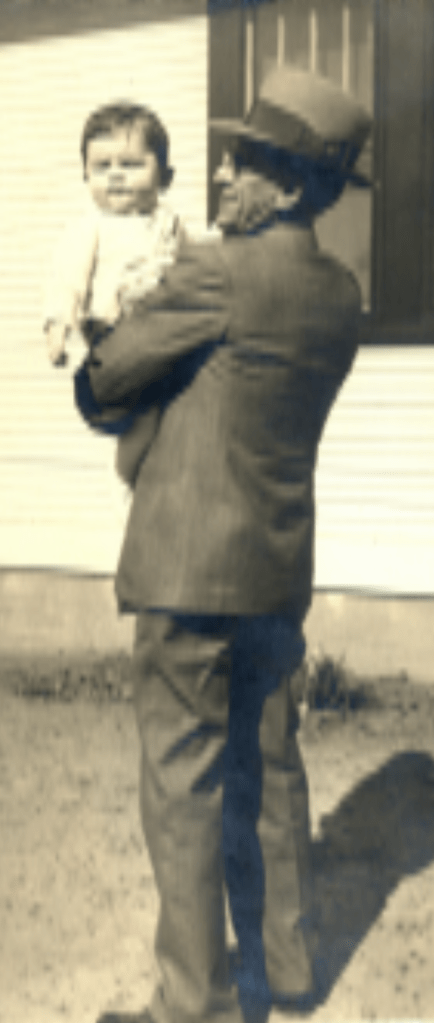
Thomas Pellatt Barber and his grandson 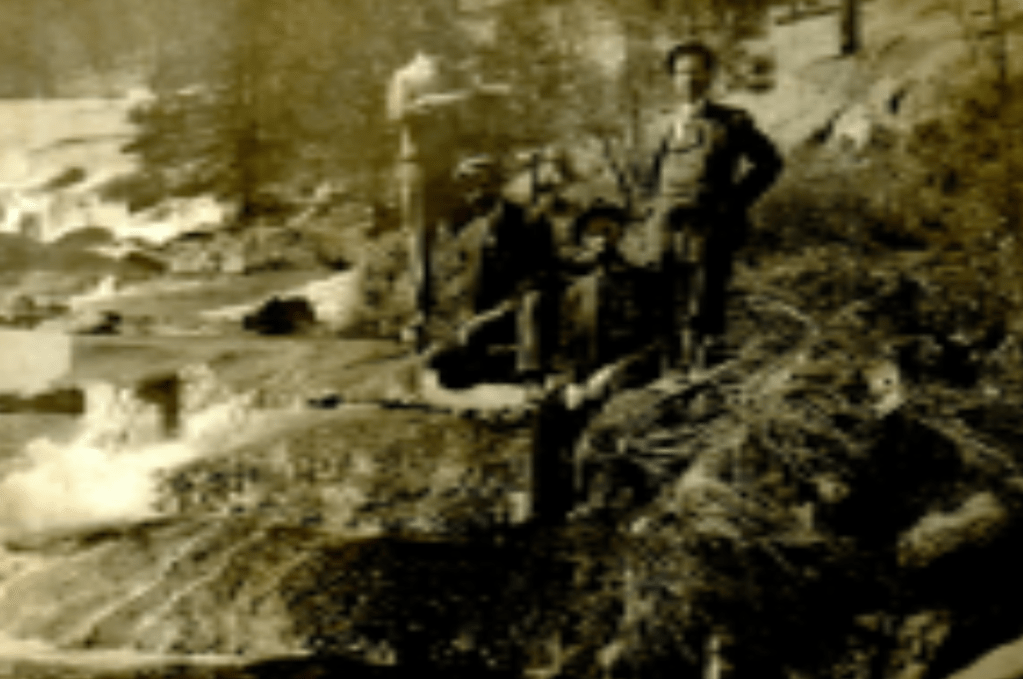
Left to Right: Fred L. Crissey (Uncle to Elizabeth Wade), Merle Smith (Pastor, 1909-16), Lewis Newsome (Father of Elizabeth Wade), and Tom Barber (Architect of 1901 church and Sunday school superintendent, 1899-1920). This picture was taken in Cheyenne Canyon, c.1914. Rev. Merle Smith left Colorado Springs to go to First United Methodist Church, Pasadena, California.
Thomas Pellatt Barber, 1863-1932
Member, First Methodist Episcopal Church, 1879-1932
Aside from his activities as architect of the Boulder Street Church, Thomas Barber also designed Beth-El Hospital and Montrose United Methodist Church, as well as the First Church Pasadena, and First Church of Hollywood, California. He joined this church in 1879, and for nearly thirty years was a Steward and Trustee. He served more than twenty years as Sunday School Superintendent. He contributed heavily to the cause of missions, especially to the work of Dr. John Z. Moore in Korea ($8,000, according to Dr. Moore).
Historic Uptown Residences
- 1892 City Directory (page 50): Barber T.P., Pease & Barber, res 507 N. Tejon.
- 1894 City Directory (page 42): Barber; T. P. (Pease & Barber), architect, res 507 North Tejon st.
- 1896 City Directory (page 52): Barber, T. P. (Pease & Barber), res 507 North Tejon st.
- 1898 City Directory (page 60): Barber, T.P., (Barber & Hastings), res 507 N. Tejon st.
- 1900 City Directory (page 66): Barber Thos P, architect 74·75 Bank bld, res 507 N Tejon.
- 1901 City Directory (page 63): Barber Thos P, architect, 74-75 Bank blk, Tel 408 A, res 507 N Tejon (Mrs Mary J)
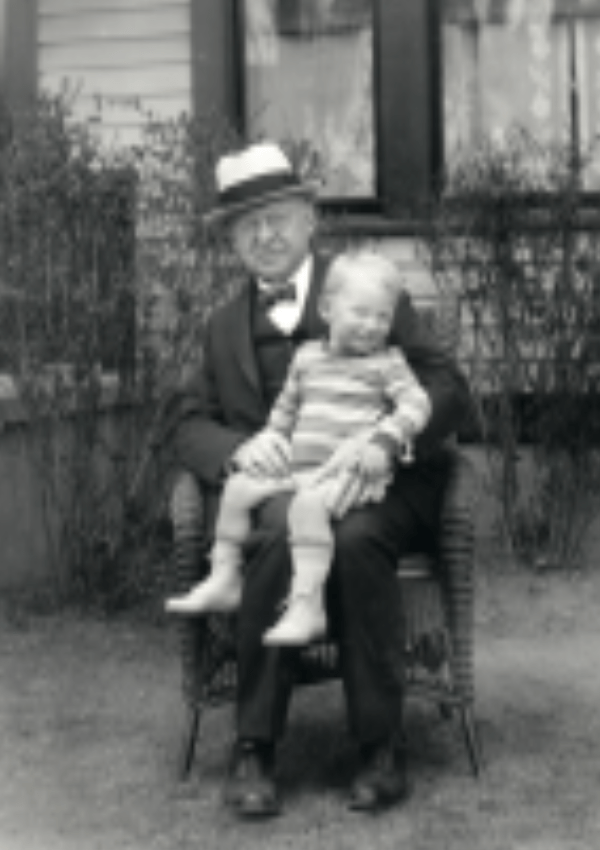
Egbert B. Simmons, 1866-1940
Member, First Methodist Church, 1886-1940
Egbert B. Simmons came from Philadelphia and at once joined this church by transfer of letter. Soon afterward he became a teacher in the Sunday school. Among his pupils were Susie Gillett who became Mrs. George Blair, and Bertha Allen who married Phil Gillett. Both couples were missionaries in the foreign fields of China and Korea. E.B. Simmons served on the building committee for the Boulder Street Church, was active on the Official Board for fifty two years, and is responsible for compiling the history of the early church. He and William Lennox served as the pulpit supply committee, responsible for the church calling both C.B. Wilcox and Merle Smith. On April 22, 1934, he delivered the morning sermon, preaching on the history of this church.
Historic Uptown Residences
- 1888 City Directory (page 127): Simmons E. B., clerk, res 330 N. Nevada.
- 1892 City Directory (page 227): Simmons E.B., supt advertising, Rep Pub Co, res 222 E. St Vrain
- 1894 City Directory (page 166): Simmons, E. B., Secretary and Treasurer Gowdy Printing Co., res 222 East St. Vrain st.
- 1896 City Directory (page 244): Simmons, E. B. (E. B. Simmons & Co.), res 222 E. St. Vrain.
- 1898 City Directory (page 250): Simmons, E. B., sec and treas Gowdy Printing Co., res 222 E. St. Vrain st.
- 1900 City Directory (page 340): Simmons Egbert B, seey & treas Gowdy-Simmons Printing Co, res 222 E St Vrain.
- 1901 City Directory (page 344): Simmons Egbert B (Gowdy-Simmons Printing Co), res 222 E St , Vrain (Mrs Myra)
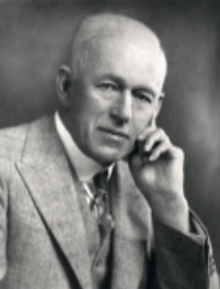
Cassius A. Hibbard, 1860-1943
Member, First Methodist Episcopal Church, 1896-1943
Mr. Hibbard served on the Board of Trustees from early 1900 until 1940. Hibbard owned the Hibbard Department Store located at 19 S Tejon St. His interest centered around the church school; it was his dream of adequate facilities for the department which started the planning and eventual construction of a new Sunday school building in 1939. Mr. and Mrs. Hibbard gave $10,000 toward this effort.
Historic Uptown Residences
- 1896 City Directory (page 145): Hibbard, C. A. (C. A. Hibbard & Co.) res 659 N. Wahsatch.
- 1898 City Directory (page 148): HIbbard, C. A. (Hibbard & Co.), res 320 E. Bijou st.
- 1900 City Directory (page 199): Hibbard Cassius A (C A Hibbard & Co), res 320 E Bijou
- 1901 City Directory (page 198): Hibbard Cassius A (C A Hibbard & Co) res 320 E Bijou (Mrs Hattie E).
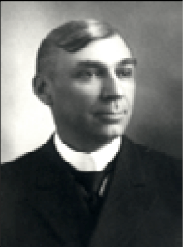
Dr. Charles B. Wilcox, 1851-1940
Pastor, First Methodist Church, 1900-1920
Dr. Charles B. Wilcox was a giant among his flock. He is still remembered by several members of the congregation, even though he left in 1920 after a second pastorate here. Born on a farm in Wisconsin in 1851, Wilcox grew up, married Mary E. Leonard and continued to farm for awhile before he answered the call to ministry. He first enrolled at Northwestern University in Evanston, Illinois, and later attended Garrett Biblical institute in order to further his education. After serving several churches in Wisconsin and the mid-west, Dr. Wilcox came to Colorado Springs in 1900 from Grand Avenue Church in Kansas City, seeking a milder climate for his wife who was suffering from tuberculosis. Unfortunately, the change of climate did not alter Mrs. Wilcox’s decline, and she died in 1906. Dr. Wilcox found solace in his ministry and two young daughters. He continued to preach here until 1909, then went to Denver to serve at Trinity and Asbury before returning to Colorado Springs in 1916. Upon retirement in 1920, he moved once again to Denver where his daughter lived. He affiliated with Trinity, where he taught the Men’s Bible Class and was recognized as the “grand old man” of Trinity until his death in December of 1940, at age 89.
Historic Uptown Residences
- 1901 City Directory (page 397): WILCOX CHAS B, pastor First M E Church, res 219 E St Vrain (Mrs Mary).
Additional Resources
- Drive Folder – a collection of documents compiled during the Historic Uptown Neighborhood’s historic preservation efforts.

Leave a Reply