Colorado Springs Historic Preservation Overlay
The Colorado Springs 7.2.608 HP-O: Historic Preservation Overlay code establishes a Historic Preservation Overlay (HP-O) district in Colorado Springs and outlines its purpose, standards for designation, surveys, and procedures.
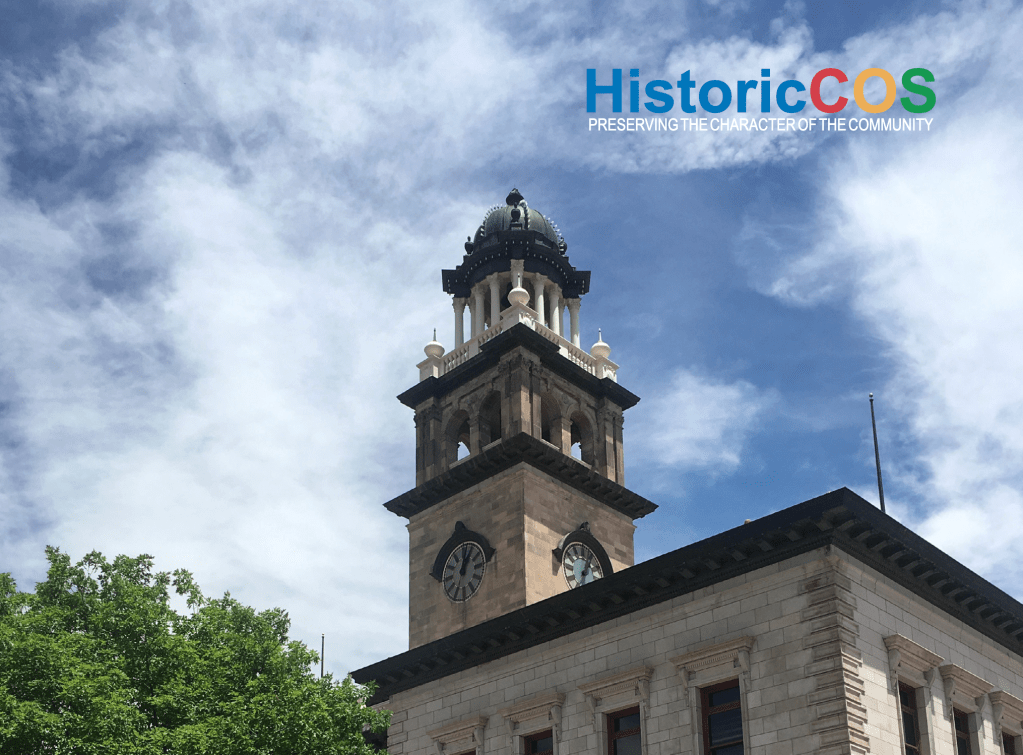
Historic Preservation Overlay Code
Purpose
The economic, cultural, and aesthetic standing of Colorado Springs cannot be maintained or enhanced by disregarding the historical and architectural heritage of the City and by ignoring the destruction or defacement of cultural assets. The protection, enhancement, perpetuation, and use of structures and areas of historical or architectural significance located within the City is a public necessity and is required in the interest of the prosperity, civic pride, and general welfare of the people. The purpose of the HP-O district is to:
- Designate, preserve, protect, enhance, and perpetuate those structures and areas that reflect outstanding elements of the City’s cultural, artistic, environmental, social, economic, political, architectural, historic, or other heritage;
- Foster civic pride in the beauty and accomplishments of the past;
- Stabilize or improve the aesthetic and economic vitality and values of such structures and areas;
- Protect and enhance the City’s attraction to tourists and visitors;
- Promote the use of outstanding historical or architectural structures or districts for the education, enjoyment, and welfare of the people of the City;
- Foster the economic and heritage tourism benefits associated with the City’s cultural assets;
- Promote good urban and architectural design in new infill buildings and rehabilitation of existing buildings including the preservation of related Green Spaces and Open Spaces; and
- Promote and encourage continued private ownership and use of buildings and other structures now so owned and used, to the extent that the objectives listed above can be attained under such a policy.
Standards for Designation of Areas for Zoning Overlay
A structure may be designated by the Council for historic preservation overlay zoning if it has either historical or architectural importance as defined below.
- Historical Importance
The structure or area:- Has significant character, interest, or value, as part of the development, heritage, or cultural characteristics of the city, state, or nation.
- Is the site of a historic event with a significant effect on society;
- Is identified with a person or group of persons who had a significant influence on society; or
- Exemplifies the cultural, political, economic, social, or historic heritage of the community.
- Architectural Importance
The structure or area:- Portrays the environment of a group of people in an era of history characterized by a historically important and distinctive architectural style;
- Embodies architecturally distinguishing characteristics;
- Is the work of an architect or builder whose individual work has influenced the development of the City;
- Contains elements of architectural design, detail, materials, or craftsmanship that represent a significant innovation; or
- Contains buildings that, although individually lacking distinction, collectively display distinguishing characteristics.
- Surveys and Inventories
- Surveys and inventories of historic properties that have been prepared by the City are on file at the Planning Department. These surveys and inventories already completed, and any completed in the future shall be a part of the Colorado Springs Comprehensive Plan.
- The City survey and inventory system shall be compatible with federal and state criteria and consistent with statewide comprehensive historic preservation planning.
- Procedures
- All procedures related to the administration of this Section 7.2.608 and the designation and regulation of historic structures are in Article 7.5: Administration and Enforcement.
Definitions
For purposes of designation, regulation, and approval of properties within the HP-O district or properties being considered for inclusion in the HP-O district, including without limitation the provisions of Sections 7.2.608 (HP-O: Historic Preservation Overlay) and 7.5.528 (Historic Resource Alteration or Demolition), the following terms shall have the meanings indicated. The City may use different definitions for terms listed below when those terms are not used in connection with historic properties and/or the HP-O district.
- Comprehensive Plan – The Colorado Springs Comprehensive Plan (PlanCOS) and all subsequent amendments to that Plan.
- Development – Any activity that alters the ground on a property. Development may include the construction of buildings, structures, or streets; installation of landscaping, infrastructure, utilities, or site features; and/or activities to prepare land for such construction or installation, such as grading. For the purposes of this UDC, this term includes new development and redevelopment of existing lots.
- District – Historic, Historic Area, Landmark or District
- Any City Council-designated site, structure, object, or improvement and its surrounding environs or a group of sites, structures, objects, or improvements, or both, and their surrounding environs:
- That has a special character or special historic or aesthetic interest or value as part of the development, heritage, or cultural characteristics of the city, state, or nation; or
- In which any event of major historical significance with a measurable effect upon society took place; or
- That is closely identified with a person or group of persons who have had some measurable influence on society; or
- In which the broad cultural, political, economic, or social heritage of the community is exemplified; or
- That faithfully portrays the environment of a group of people in an era of history characterized by a distinctive architectural style or that embodies those distinguishing characteristics of an architecturally recognized detail or that is the work of an architect or builder whose individual work has influenced the development of the city; or
- That, because of being a part of or related to a park, square, or other distinctive area should be developed or preserved according to a plan based upon its historic, cultural, or architectural significance; or
- That, due to the unique location or singular physical characteristic, represents an established, familiar, and significant visual feature of the neighborhood, community, or city; and
- That is officially zoned historic preservation overlay under the provisions of this UDC.
- Existing – For purposes of Section 7.5.512 (WCF Eligible Facilities Requests), a constructed Tower or Base Station exists if it has been reviewed and approved under the applicable zoning or siting process, or under another state or local regulatory review process, provided that a Tower that has not been reviewed and approved because it was not in a zoned area when it was built, but was lawfully constructed, is existing for purposes of this definition so long as the Tower has maintained the requirements of legal, nonconforming status under this UDC.
- Open Spaces – A tract of land that is kept in its natural state in perpetuity for public use. Vacant land that may be subject to future development is not considered open space. There is no specified size range for open space, other than the minimum area needed to conserve a significant natural feature.
- Person – When this UDC refers to actions or ownership by a person, that reference includes an individual, firm, partnership, corporation, company, association, joint stock association, or governmental entity, and includes a trustee, receiver, assignee, administrator, executor, or guardian, or a similar representative of any of those types of organization.
- Preservation – The act or process of applying measures to sustain the existing form, integrity, and material of a building or structure, and the existing form and vegetative cover of a site. it may include initial stabilization work where necessary, as well as ongoing maintenance of the historic building materials.
- Protection – The act or process of applying measures designed to affect the physical condition of a property by defending or guarding it from deterioration, loss, or attack, or to cover or shield the property from danger or injury. in the case of buildings and structures, such treatment is generally of a temporary nature and anticipates future historic preservation treatment.
- Rehabilitation – The act or process of returning a property to a state of utility through repair or alteration that makes possible an efficient contemporary use while preserving those portions or features of the property that are significant to its historical, architectural, and cultural values.
- Site – For purposes of Section 7.5.512 (WCF Eligible Facilities Requests), for Towers other than towers in the public rights-of-way, the area in proximity to the Structure, and to other Transmission Equipment already deployed on the ground.
- Structure – Anything constructed or erected that is permanently located on the ground.
Additional Resources
- Full Text for 7.2.608 HP-O: Historic Preservation Overlay, adopted February 14, 2023 – unified development code for historic preservation overlay in Colorado Springs
- HistoricCOS, approved December 10, 2019 – a city-wide planning document for preservation in the City of Colorado Springs that aims for acceptance and incorporation of historic and cultural resources as a central part of the ongoing economic and community development strategy of the City.

Leave a comment