Celebrating Historic Uptown Neighborhood’s 2022 Achievements
The Historic Uptown Neighborhood achieved remarkable milestones in 2022, demonstrating our commitment to community involvement and preserving the rich heritage of our beloved neighborhood. Here’s an in-depth look at our accomplishments.
Earth Day 🌎 tree planting on Willamette Ave. was a huge success!
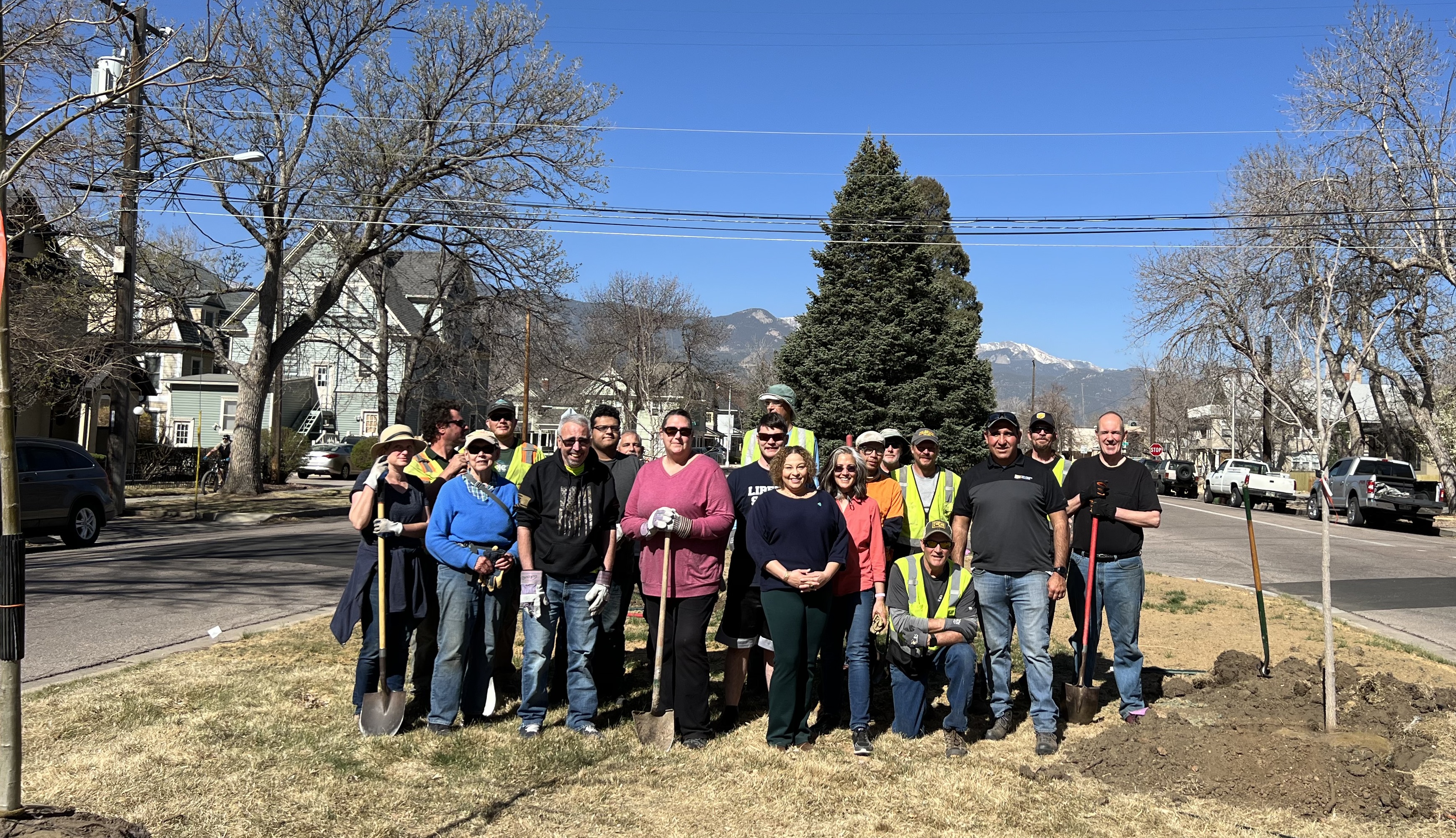
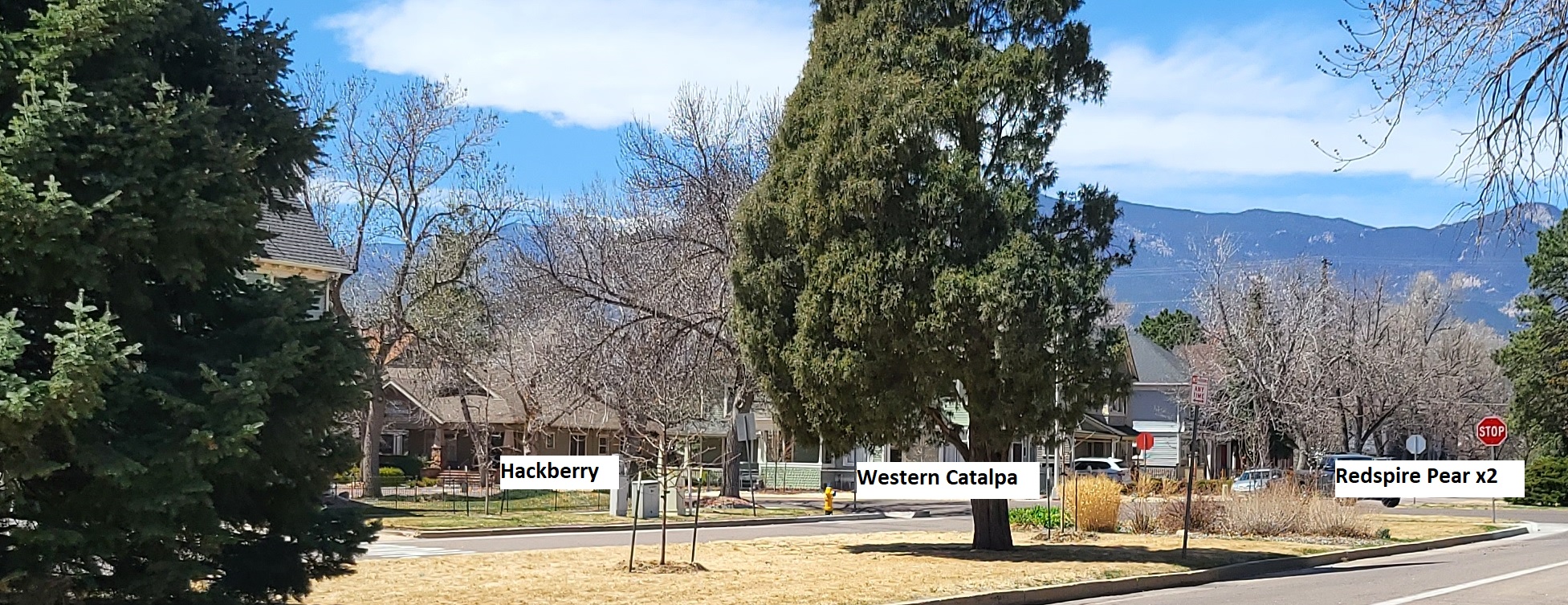
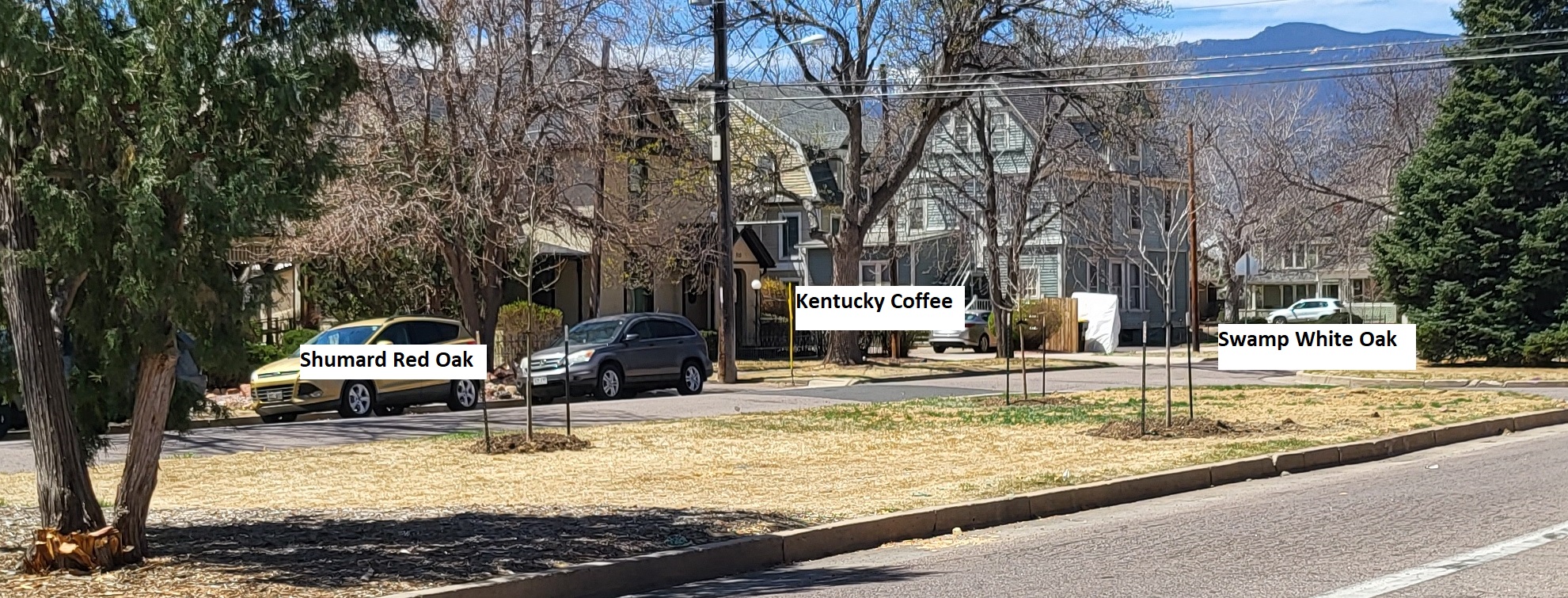
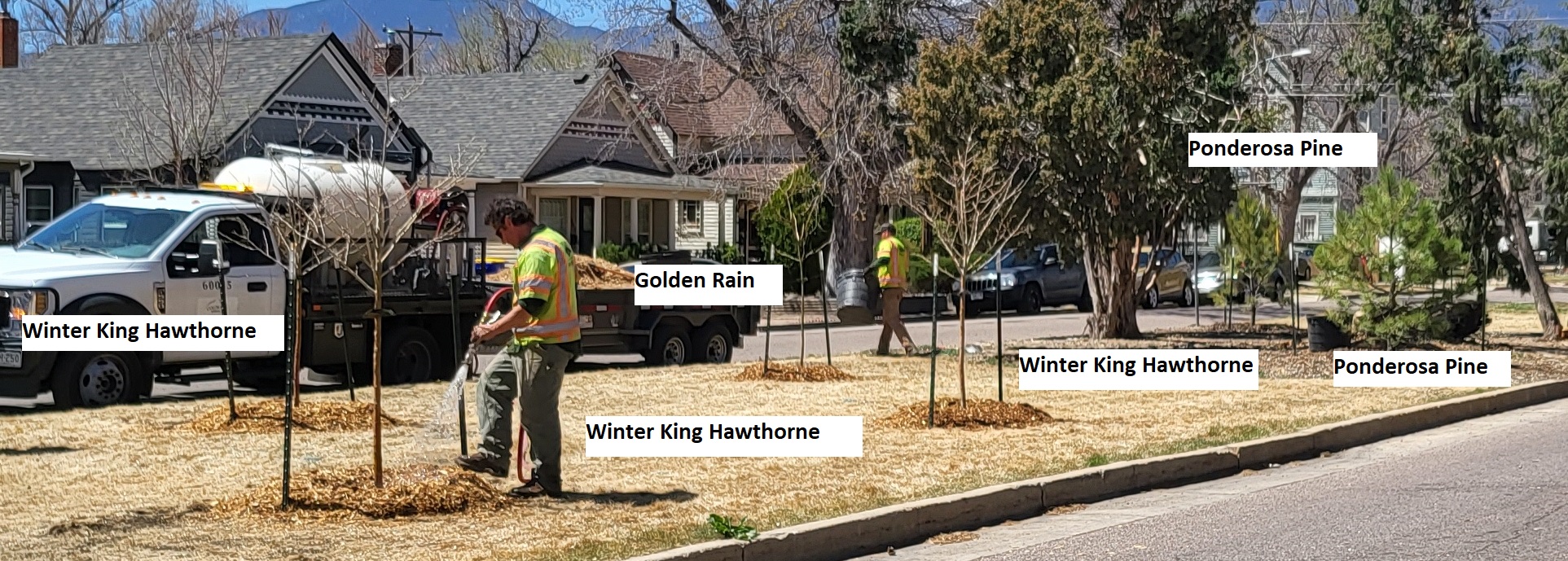
The Earth Day 2022 tree planting event on Willamette Ave. was more than just planting trees; it was a testament to the power of community collaboration with City Forestry, Colorado College, Historic Uptown, and Community Prep coming together. The event was a response to the devastating windstorm in December 2021, which uprooted numerous trees in the area. In a true display of unity, the Historic Uptown Neighborhood, City of Colorado Springs Foresters, and Colorado College joined forces.
During this event, we planted a total of 12 trees, generously donated by Colorado College, in the center median at the corner of Wahsatch and Willamette Avenue. These trees, featuring a diverse array of species, not only replaced what was lost but also celebrated Earth Day in style. The event was a testament to our shared commitment to enhancing the urban environment, thanks to the active participation of volunteers, city foresters, and community members.
These new trees serve as vital tree canopies for Colorado College, Palmer High School, and our entire neighborhood, contributing to the mitigation of urban heat and significantly improving our local environment. It’s a symbol of our collective dedication to creating a greener, more sustainable future for our neighborhood and the planet.
Click here to read KRDO’s news coverage of the event.
COS Initiatives RetoolCOS
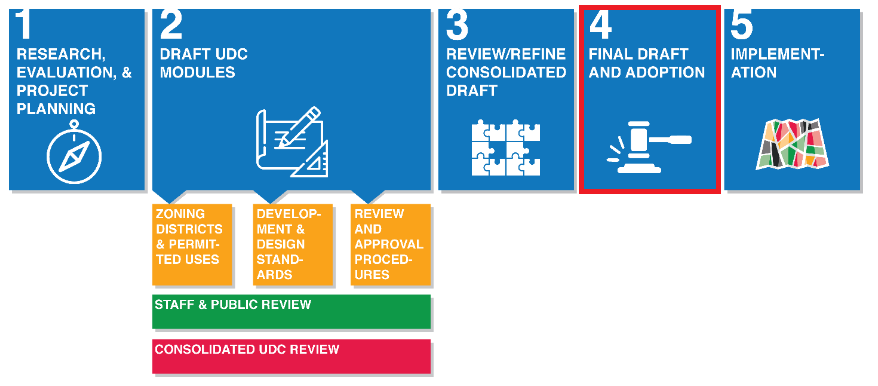
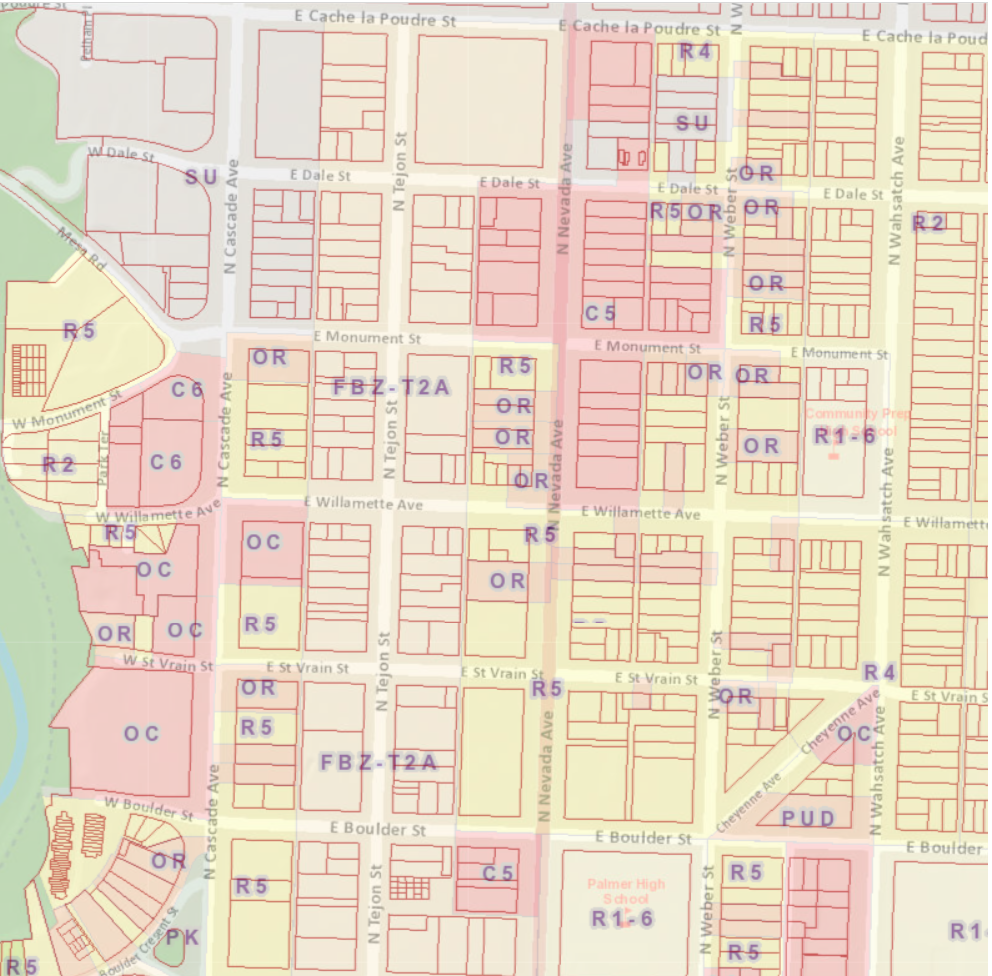
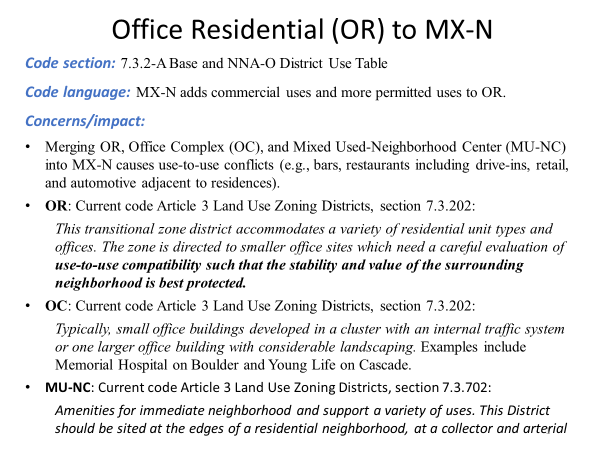
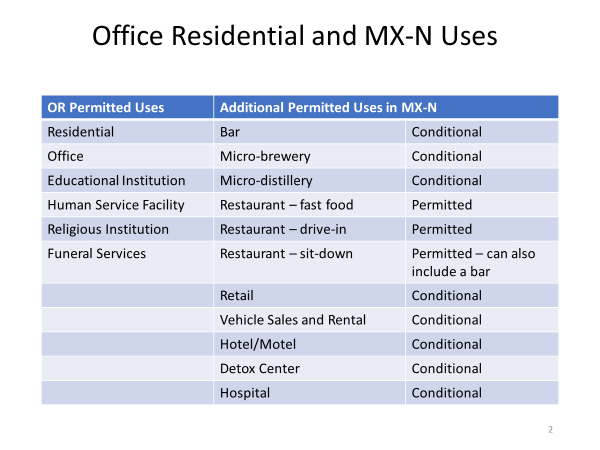
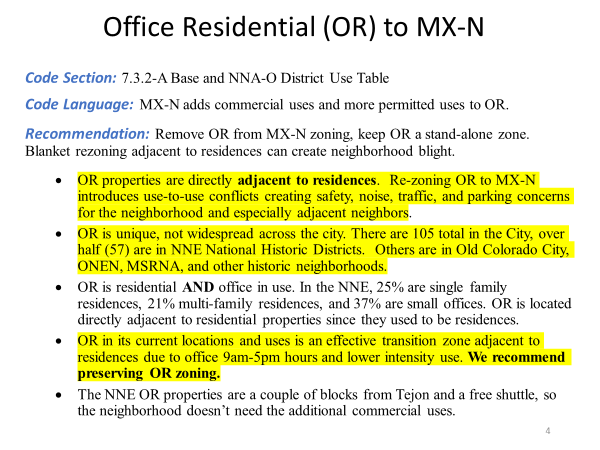
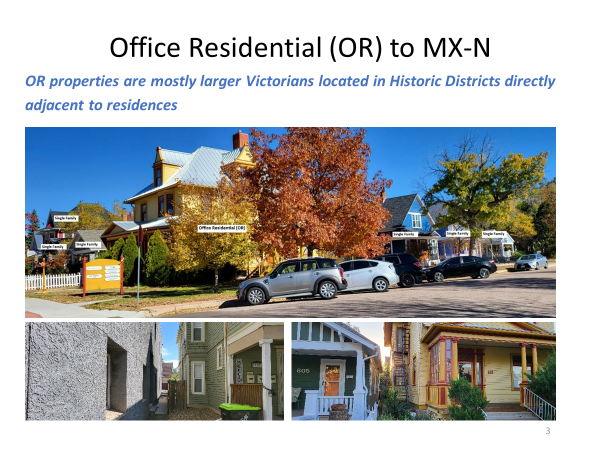
RetoolCOS proposed rezoning Office Residential (OR) properties to Mixed-Use Neighborhood (MX-N). This move would have allowed extensive commercial uses for OR properties. However, our dedicated efforts ensured the preservation of OR zoning, protecting the neighborhood’s original character and intended purpose.
Preserving OR zoning offers several critical benefits for our neighborhood:
- It maintains the balance between office and residential spaces, fostering a harmonious coexistence of work and living environments.
- It contributes to a more stable and predictable neighborhood, preventing the expansion of commercial uses within these areas.
- This preservation can have a positive impact on traffic and congestion, ensuring safer and less congested streets, and making the neighborhood more pedestrian and resident-friendly.
Our commitment to preserving OR zoning reflects our dedication to creating a peaceful and livable community for all residents.
Summary of Our Efforts
- City Council adopted Retool Final Draft on 14 Feb 2023
- The zoning changes will be in effect in Summer 2023
- Historic Neighborhood Preservation had 8 open areas of concern for the Council
- Two with significant impact on the Historic Uptown Neighborhood: Office Residential (OR) Zone Changes and Transit-Oriented
- Development
- Office Residential Zone Changes:
- The proposal was to merge OR into a new mixed-use zoning district MX-N (currently only has OC)
- The team, in particular Cheryl, was able to remove the proposed changes and keep OR zoning as-is
- The impact was the addition of new zones in our neighborhood (bars, restaurants, tiny house communities, hotels/motels, transit stations, light vehicle staging areas, etc.) and changes to the dimensional standards (increased setbacks, increased heights, removed minimum lot areas).
- The proposal was to merge OR into a new mixed-use zoning district MX-N (currently only has OC)
- Transit-Oriented Development (TOD)
- The proposal was to introduce such development along current/future transit lines. TOD incentives will be allowed at stops. Higher density, reduced parking, etc.
- That would have impacted our historic areas on proposed routes on Nevada/N. Weber
- The team, in particular Cheryl, was able to add protective wording that stipulates: “Properties within the HP-O district or on the National Registry of Historic Properties are not eligible for this incentive.”
- This language will protect our historic neighborhood
- Areas of Concern
- Dimensional Standards – maximum lot coverage ratio
- Office Residential to MX-N zoning change (largest impact on Historic Uptown)
- Appeals preserved standing
- Neighborhoods left out of UDC purpose statement
- Development plan review
- Area Design Standards Overlay
- Parking in Historic Neighborhoods
- Transit Oriented Development (largest impact on Historic Uptown)
- Historic Preservation specifics
- The 20-year plan that includes the PPRTA3 items on the Nov Ballot (PPRTA was 10-year plan)
- Involves approx. 140 different transportation initiatives, minimally 3 of Historic Uptown interest
- N. Nevada / Weber Transit
- N. Nevada Safety
- East-West Mobility
- The team worked with the City to establish key assumptions/guardrails for these initiatives
- N. Nevada / Weber Transit – the project includes feasibility, planning & design (not implementation); involves the public in study/planning/design, evaluates I-25 for regional needs, evaluates multi-modal capabilities, has limitations
- N. Nevada Safety – north of Unitah, involve the public in developing near-term/long-term plans, plan to be flushed out by the end of March 2023
- The team worked with the City to establish key assumptions/guardrails for these initiatives:
- East-West Mobility – evaluate alternatives, not just Constitution; no connections to adjacent roads, limit to a total of 4 through lanes, no taking of homes
- Next Steps:
- City Council first reading – 28 February 2023
- City Council second reading – 14 March 2023
- Continuation of N. Nevada Safety discussions & development of an action plan
Historic Preservation
Boundaries, Goals, & Data
North: E. Cache La Poudre Street; South: E. Bijou Street
East: Alley at Wahsatch & Corona; West: Monument Valley Park
Unique Characteristics:
- Significant presence on the National Register of Historic Places –Weber/Wahsatch District; Boulder Crescent District; Monument Valley Park; Nine buildings
- Mutual community among residences, businesses, landlords, students
- Amenities of all kinds within walking distance (fine arts, food, boutiques, sports)
What We Care About:
- Identifying, preserving, and celebrating historic homes, businesses, and other features
- Preserving and improving the streetscape, particularly the historic medians, parkways, and canopy trees
- Improving safety and living conditions and addressing the increase in crime
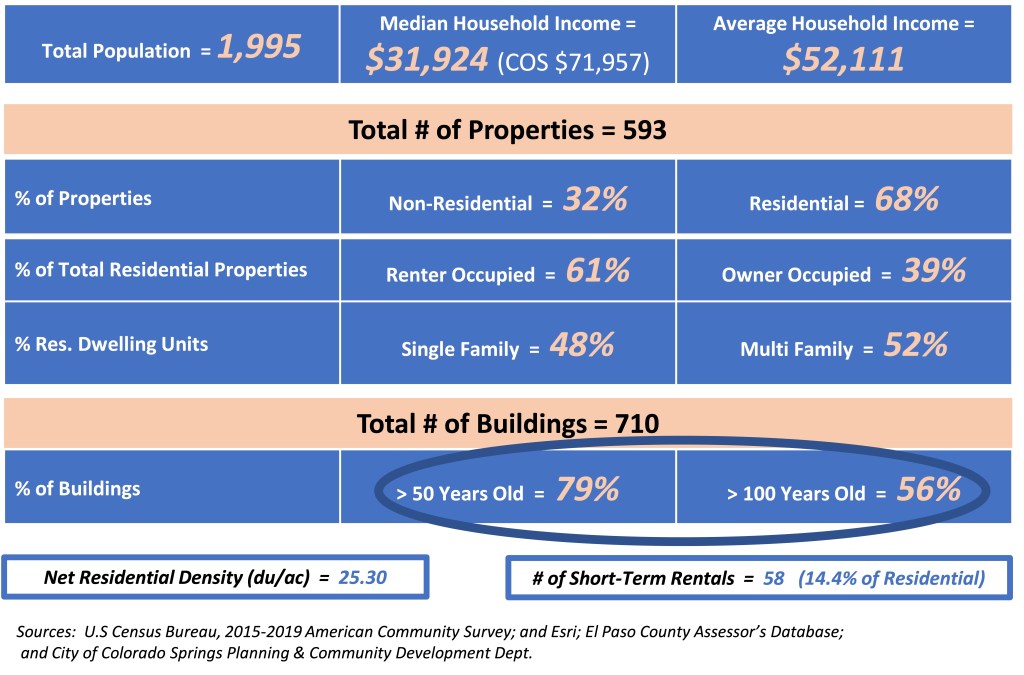
Zoning
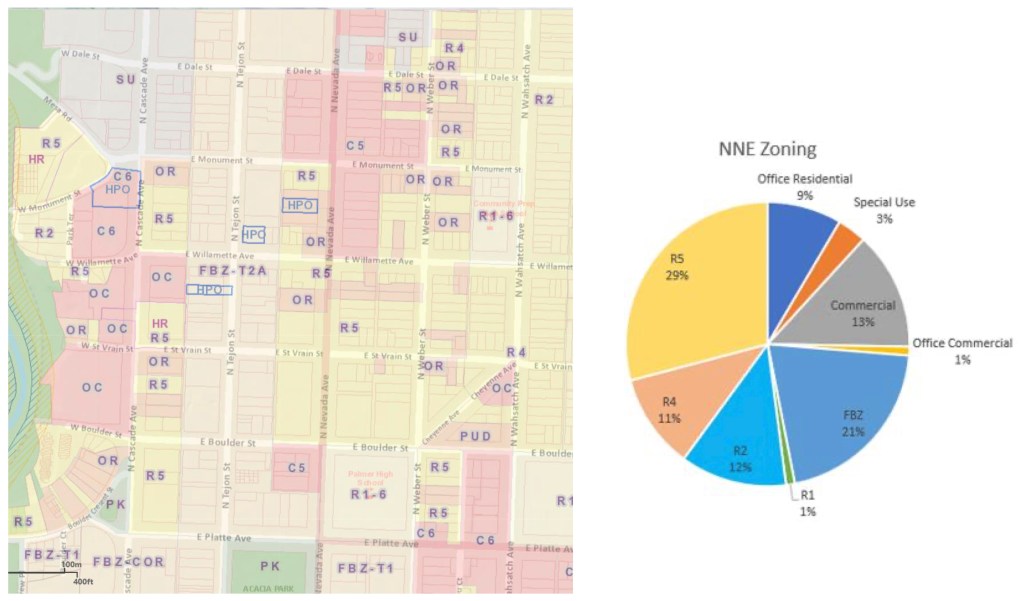
Neighborhood Demographics
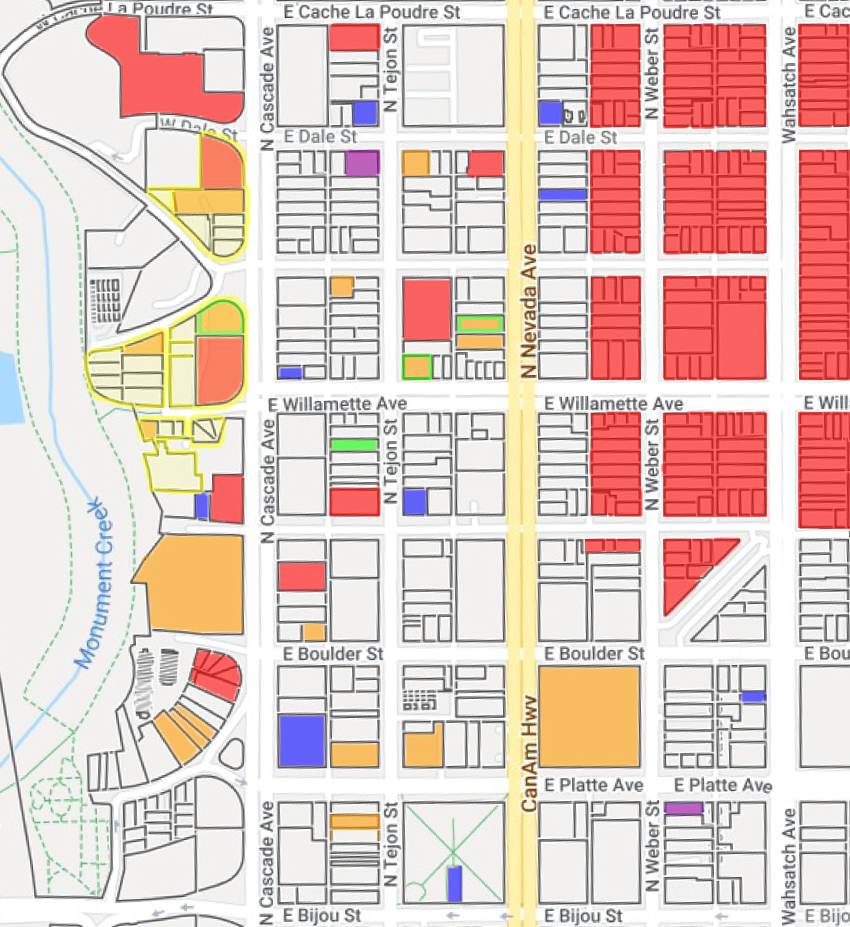
We mapped all of the Historic Uptown historic properties and are currently focusing our historic preservation efforts on the Historic Uptown Northwest District – highlighted in yellow.
Historic Uptown map with color-coded historic designations:
National Register – red
Eligible National Register – orange
State Register – purple
Eligible State Register – blue
Historic Preservation Overlay Zone – green
In our quest to preserve the rich heritage of our neighborhood, we embarked on an ambitious mapping project for all the historic properties in the Historic Uptown Northwest District, as highlighted in yellow on the map. We categorized them into National Register, Eligible National Register, State Register, Eligible State Register, and Historic Preservation Overlay Zone.
Preserving historic properties is of paramount importance, as they are living connections to our past, steeped in stories and architectural heritage. Our efforts to map and preserve these properties in the Historic Uptown Northwest District are a testament to our commitment to safeguarding our cultural and architectural legacy.
Our color-coded map showcases the diversity and significance of each historic designation, from National Register properties in red to State Register properties in purple. This not only maintains the neighborhood’s unique charm but also promotes tourism, enhances property values, and fosters a sense of community pride.
The presence of a Historic Preservation Overlay Zone in green underscores our commitment to protecting and enhancing the historical and architectural integrity of this district, ensuring that new developments respect the area’s historical context.
Steps to Historic Preservation Overlay
- Gathered historical data and generated a summary of Leftkowsky, who developed the Leftkowsky sub-division, to show his historic and architectural heritage to the city. This phase is complete.
- Create a packet to distribute to owners containing a fact sheet identifying historic designation choices, boundary, and thumbnail history of each property, and flow charts of the HPOZ process. This phase is almost complete.
- Distribute packets to owners and determine how they want to proceed.
- Implementation – coordinate with affected property owners. Notify the city.
Our preservation efforts not only conserve our past but also contribute to a vibrant and thriving future, fostering a deeper appreciation of our local history and enriching the lives of those who call this district home.
These accomplishments are a testament to our neighborhood’s strength, unity, and commitment to preserving our heritage and creating a sustainable future. We look forward to even more remarkable achievements in the years to come!
2023 Goals
- Historic Preservation – continue our efforts in the Northwest District
- Advocate for our neighborhood by engaging with the city on zoning, transportation, and any other initiatives that affect our neighborhood.
- Set up a PayPal account to cover expenses.
- Do we want to bring back Neighborhood Watch? Do we need volunteers?
Board Election
- Board of Directors – The Board of Directors shall be elected at large by the general membership. Four of those Board Members shall be elected by the Board to serve as Officers. To vote, you must be a Historic Uptown neighborhood resident, owner of real property, or a business proprietor.
- Officers
- President – The president conducts Board meetings and ensures that the Board’s directives are implemented and monitored
- Vice President – The vice president of the Board, is prepared at all times to assume the role of Board president, if necessary.
- Secretary – The Board’s secretary provides members with required meeting notices, prepares agendas, takes minutes at Board meetings, and reviews and distributes the approved minutes
- Treasurer – The treasurer serves as the financial officer

Leave a comment